

Hydroponics Blog
Rooftop Hydroponics UAE: Urban Farming on Dubai & Abu Dhabi Rooftops 2026

Quick Answer
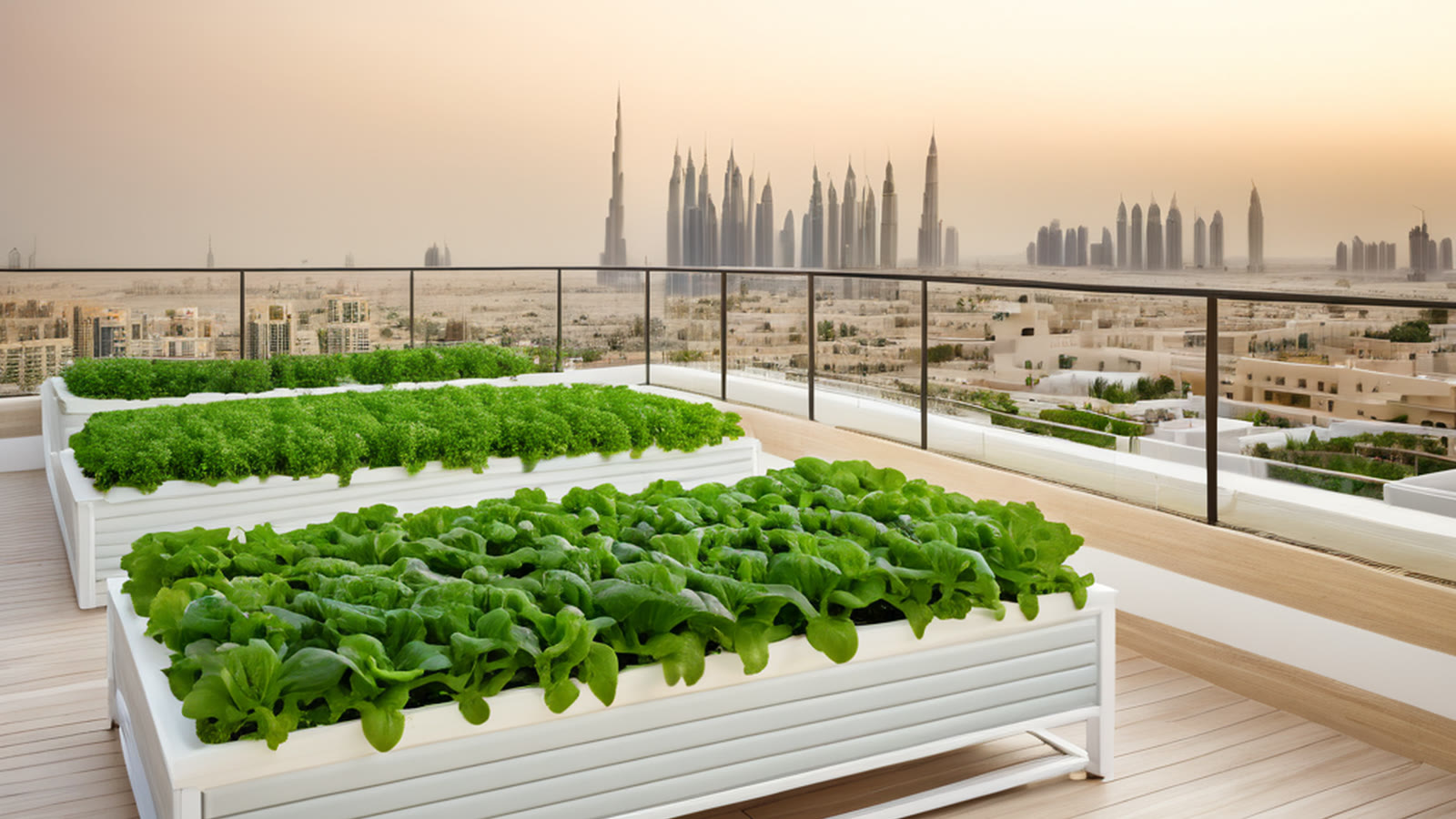
Rooftop hydroponics in UAE combines urban farming with building space utilization. Suitable for villas, commercial buildings, and apartment building rooftops with structural approval. The UAE climate offers intense sunlight and long growing seasons (October–May outdoors). Key challenges: wind protection, summer heat (move crops indoors June–September), waterproofing, and load-bearing verification. Small rooftop systems start from AED 1,000; commercial rooftop farms from AED 50,000.
Rooftop Hydroponics Requirements in UAE
| Requirement | Details | UAE Specifics |
|---|---|---|
| Structural Load | Verify rooftop load capacity with structural engineer | UAE codes: consult municipality before major installation |
| Waterproofing | Critical — water must not penetrate building | Use secondary containment trays under all systems |
| Wind Protection | Shamal winds 40–60 km/h June–Sept | Install windbreak netting or plant near parapet walls |
| Shade Structures | 50% shade reduces heat stress March–October | Aluminum shade structures with 50% shade cloth |
| Water Access | Must bring water to rooftop | Install dedicated rooftop water line or large tanks |
| Electricity | For pumps, lighting (winter days short) | UAE rooftop solar ideal for powering pumps |
Best Systems for UAE Rooftop Hydroponics
| System | Rooftop Suitability | Weight | Wind Resistance |
|---|---|---|---|
| NFT Channels (floor level) | Excellent | Light | Good (low profile) |
| Dutch Bucket | Good (fruiting crops) | Moderate (filled buckets) | Good (heavy, stable) |
| Vertical Tower | Moderate | Light | Poor (tall, wind-exposed) |
| Media Bed (raised) | Good | Heavy | Excellent (low, stable) |
| Grow Bags / Dutch Bucket | Excellent | Moderate | Good |
UAE Rooftop Growing Calendar
October–April: Excellent for all crops outdoors on UAE rooftops. May: Heat building — herbs and heat-tolerant crops only. June–September: Too hot for outdoor rooftop production (40–50°C) — either move portable systems indoors or install shade structures with evaporative cooling. The beauty of hydroponic systems is their mobility — NFT channels and Dutch Buckets can be moved indoors during summer.
Solar-Powered Rooftop Hydroponics in UAE
UAE’s rooftops receive exceptional solar irradiance (5.5–6.5 kWh/m²/day). A small solar panel (200–400W) can power all pumps and LED lighting for a medium rooftop hydroponic system. This makes UAE rooftop hydroponics uniquely suited for solar integration — particularly appealing for villa owners and commercial building operators who can offset their electricity consumption while producing food. Typical cost: AED 1,500–4,000 for a complete rooftop solar + pump system.
Frequently Asked Questions
Do I need permission for rooftop hydroponics in UAE?
For small home systems (under 10m²): typically no permit required. For larger commercial-scale rooftop farms (structural modifications, permanent installations): municipality approval is required. Check with your local municipality (Dubai Municipality, Abu Dhabi City Municipality, etc.) for current guidelines. Many UAE free zones and commercial buildings actively encourage rooftop farming as part of sustainability programs.
References
- Dubai Municipality — Urban Farming and Rooftop Garden Guidelines
- Cornell University — Rooftop Horticulture
- FAO — Urban Agriculture in the Middle East
- ADAFSA — Urban Agriculture Standards
Shop Hydroponic Equipment — UAE Delivery
Get everything you need to start growing hydroponically with fast delivery across Dubai, Abu Dhabi, Sharjah, and all Emirates:
- NFT Channel System 3m (AED 2,796) — Complete 10-channel growing system
- NFT Channel System 100cm (AED 1,196) — Compact balcony-friendly system
- Dutch Bucket System (AED 50) — Perfect for tomatoes, peppers, cucumbers
- MaxGrow Nutrient A+B (AED 130) — Professional-grade vegetative nutrition
- MaxBloom Nutrient A+B (AED 120) — Flowering and fruiting formula
- pH Down Solution (AED 79) — Essential for UAE water
- LECA Clay Pebbles (AED 45) — Premium growing medium
Related Posts
Hydroponic Peppers UAE: Complete Growing Guide for Dubai & Abu Dhabi

Vertical Garden UAE: Complete Guide to Wall and Tower Garden Systems
UAE Food Security and Hydroponics: How Home Growing Helps 2026
Hydroponic Cucumbers UAE: Grow Crisp Cucumbers at Home in Dubai 2026
Aquaponics UAE: Combining Fish and Hydroponics in Dubai & Abu Dhabi 2026
Hydroponic Lettuce UAE: Grow Perfect Salad Greens at Home 2026
Hydroponics for Schools UAE: Educational Growing Projects 2026
pH and EC Guide for UAE Hydroponic Growers: Master Water Chemistry 2026
Hydroponics vs Soil Gardening UAE 2026: Which is Better?
Hydroponic Herbs UAE 2026: Grow Basil, Mint & Coriander at Home
Hydroponic Tomatoes UAE: Grow Juicy Tomatoes at Home 2026
Hydroponic Strawberries UAE: Grow Sweet Berries at Home 2026
One thought on “Rooftop Hydroponics UAE: Urban Farming on Dubai & Abu Dhabi Rooftops 2026”
Leave a Reply
You must be logged in to post a comment.
We converted our building rooftop in JLT Dubai to a community hydroponic farm. 20 families now growing their own vegetables. The rooftop temperatures are managed with proper shade structures. This guide was our blueprint!