
Hydroponics Blog
Aquaponics UAE: Combining Fish and Hydroponics in Dubai & Abu Dhabi 2026

Quick Answer
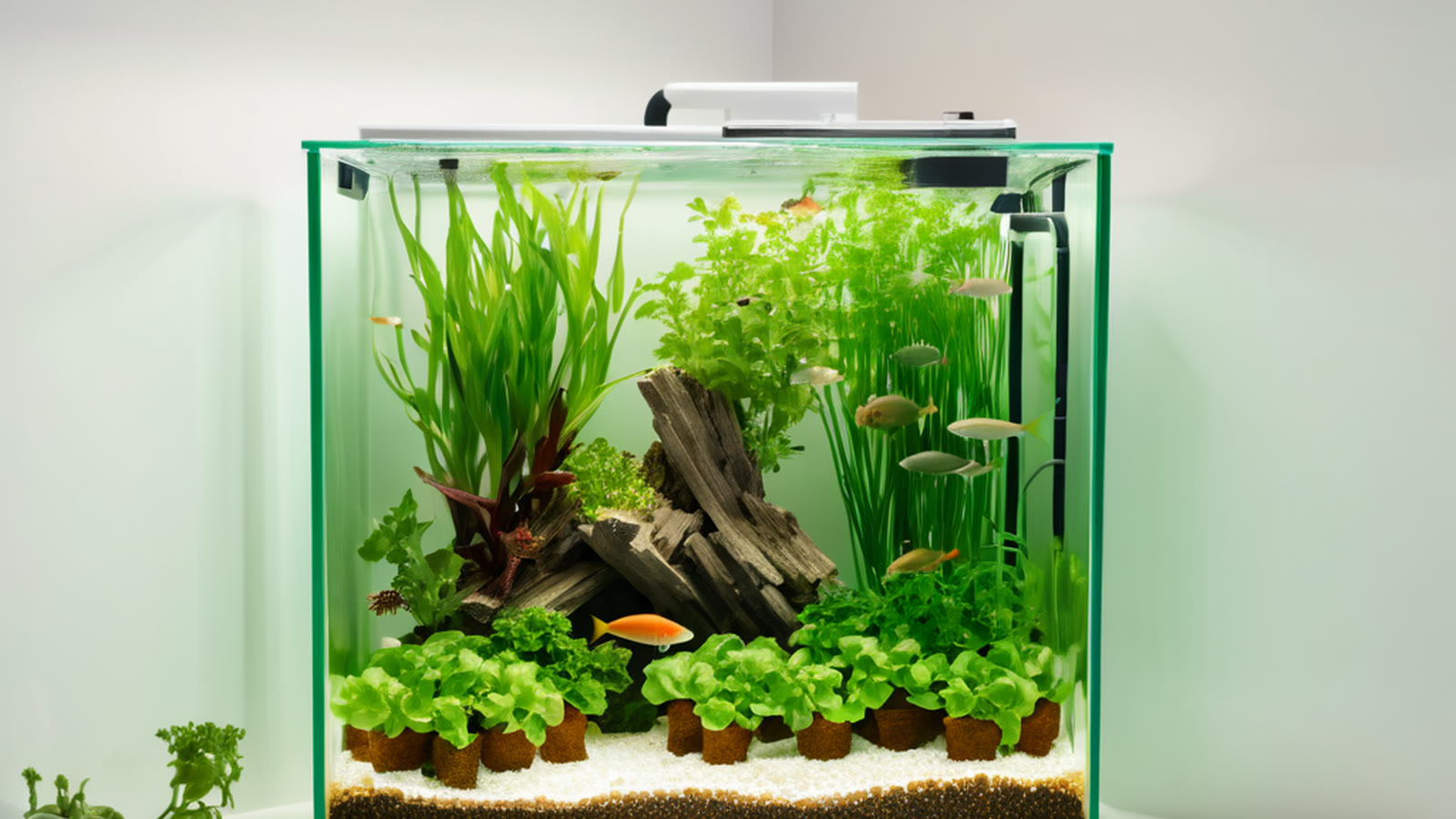
Aquaponics in UAE combines fish farming with hydroponics in a single closed-loop system: fish produce ammonia-rich waste that bacteria convert to plant nutrients; plants clean the water for fish. In UAE, tilapia, catfish, and ornamental fish (koi, goldfish) are the most popular species. A functional home aquaponics system can be built for AED 500–3,000. It uses 90–95% less water than conventional farming and produces both fish and vegetables from one system.
Key Definitions
- Aquaponics: An integrated system combining aquaculture (fish farming) and hydroponics (soilless plant growing) in a recirculating loop. Fish waste provides nutrients for plants; plants filter water for fish.
- Aquaculture: The practice of breeding, rearing, and harvesting fish, shellfish, or other aquatic organisms in controlled environments.
- Nitrification Cycle: The biological process where beneficial bacteria (Nitrosomonas, Nitrobacter) convert fish ammonia (NH3) to nitrite (NO2) and then to nitrate (NO3), which plants absorb as nitrogen nutrition.
- Biofilter: The component of an aquaponic system where nitrification bacteria colonize — usually the growing media in media beds. Critical for converting fish waste to plant-available nutrients.
- Recirculating System: Water continuously circulates between fish tank and plant growing area. 90–95% of water is retained (vs 100% lost in pond aquaculture or soil farming).
How Aquaponics Works
The aquaponic cycle runs in three stages: (1) Fish are fed commercial fish food; their metabolic waste produces ammonia (NH3) in the water. (2) Beneficial bacteria colonizing the growing media (biofilter) convert ammonia → nitrite → nitrate (the nitrification cycle). (3) Plants absorb nitrate as nitrogen nutrition, cleaning the water. Cleaned water returns to the fish tank. The entire loop is self-regulating once established — typically requiring 4–6 weeks to fully establish (“cycle”) before plants can be added at full density.
Aquaponics System Types for UAE
| System Type | Description | Best For | UAE Suitability | Cost (AED) |
|---|---|---|---|---|
| Media Bed | Plants grow in gravel/hydroton over a fish tank. Simple, effective biofilter | Beginners, home growing | Excellent — robust and forgiving | 500–3,000 |
| NFT Aquaponics | Fish tank supplies nutrient water to NFT channels. Higher plant density | Leafy greens, herbs | Good — requires more management | 2,000–8,000 |
| Raft/DWC Aquaponics | Plants float on rafts over fish effluent. Commercial scale | Lettuce, leafy greens at scale | Good for commercial | 5,000–50,000+ |
| Hybrid Aquaponics | Separate hydroponic plant area supplemented with fish effluent | Fruiting crops + leafy greens | Excellent for UAE commercial | 10,000–100,000+ |
Best Fish Species for UAE Aquaponics
| Species | Water Temp | UAE Summer Suitability | Edible? | Growth Rate | Notes |
|---|---|---|---|---|---|
| Tilapia (Nile) | 22–30°C | Excellent — tolerates UAE heat | Yes | Fast (500g in 6 months) | Most popular UAE aquaponics fish |
| Catfish | 20–28°C | Very Good | Yes | Moderate-Fast | Tolerates low oxygen better than tilapia |
| Koi / Goldfish | 10–25°C | Moderate — needs cooling above 28°C | No (ornamental) | Slow | Popular for garden aquaponics aesthetics |
| Barramundi | 24–30°C | Very Good | Yes (premium) | Fast | High-value fish for commercial UAE |
| Shrimp (freshwater) | 24–28°C | Good | Yes | Moderate | Can combine with tilapia |
UAE Aquaponics Climate Challenges and Solutions
| Challenge | UAE Severity | Solution |
|---|---|---|
| Water temperature above 30°C (fish stress) | Very High (summer) | Indoor AC, shade structures, water chiller, shade paint on tanks |
| Evaporation (summer) | High | Cover all water surfaces, indoor system, top up weekly with pH-adjusted water |
| pH management (UAE tap water pH 7.5–8.5) | High | Aquaponics target pH is 6.8–7.2 (higher than hydroponics) — partial compatibility |
| Beneficial bacteria establishment in summer heat | Moderate | Add commercial nitrification bacteria starter to speed cycling |
| Ammonia spikes in hot water | High | Reduce fish feeding rate in summer; test NH3 weekly; add aeration |
Key Difference: Aquaponics vs Hydroponics pH in UAE
One critical difference for UAE growers: aquaponics operates at a higher pH than hydroponics. Fish and bacteria require pH 6.8–7.5; hydroponic plants prefer pH 5.8–6.5. Aquaponics compromises at pH 6.8–7.2. In UAE, this means: do NOT use phosphoric acid (pH Down) aggressively in aquaponics as you would in hydroponics — the fish and bacteria will die. UAE tap water (pH 7.5–8.5) actually needs only minor adjustment for aquaponics — much less pH Down than pure hydroponics requires.
Building a Home Aquaponics System in UAE
Basic Media Bed System (10–30 fish, 1–2m² growing area)
Components needed: Fish tank (200–500L opaque container), Media bed (same or larger volume as fish tank), Hydroton or gravel growing media (washed and pH-soaked), Flood/drain timer system or bell siphon, Aeration pump + air stones (essential), Water pump (500–1,500 L/hr), pH and ammonia test kits.
Estimated cost: AED 800–3,000 for a complete home system. Annual operating cost (fish food, electricity): AED 300–600.
System Cycling Timeline
- Day 1–7: Add fish (low density initially), add commercial nitrifying bacteria starter
- Week 1–3: Monitor ammonia daily — it will spike. Test ammonia, nitrite, nitrate, pH daily
- Week 2–4: Nitrite rises as ammonia converts — still toxic to fish; continue monitoring
- Week 4–6: Nitrate appears and rises; ammonia and nitrite drop to near zero. System is cycled
- Week 6+: System fully cycled — add plants at full density, maintain fish feeding
5 Quotable Facts About Aquaponics in UAE
- Aquaponics uses 90–95% less water than conventional soil farming — a critical advantage in UAE where water scarcity ranks as a top national security concern and the country desalinates 42% of its drinking water.
- Tilapia is the most popular aquaponics fish in UAE because it tolerates water temperatures up to 33°C — surviving UAE summers in shaded tanks without chilling systems that other species require.
- A mature aquaponics system produces two food outputs simultaneously — fish (protein) and vegetables (produce) — from the same water, making it the highest food-per-litre-of-water system available to UAE growers.
- Aquaponics pH of 6.8–7.2 is actually more compatible with UAE’s alkaline tap water (pH 7.5–8.5) than pure hydroponics (target pH 5.8–6.2), requiring less pH adjustment and making aquaponics easier for UAE beginners who struggle with pH management.
- The UAE’s first commercial-scale aquaponics operation, established before 2020, demonstrated yields of 70+ kg of vegetables per day from a 200m² facility while simultaneously producing 500kg of tilapia per year — a model for sustainable UAE food production.
Frequently Asked Questions
Is aquaponics better than hydroponics for UAE home growers?
It depends on goals and complexity tolerance. Aquaponics produces both fish and vegetables and requires no purchased nutrients (fish provide them). However, it requires more monitoring (ammonia, nitrite, nitrate, pH, fish health), has a 4–6 week cycling period before productivity, and is more sensitive to mistakes. Hydroponics is simpler to set up and manage. For UAE beginners, start with hydroponics — move to aquaponics once you have growing experience.
Can tilapia survive UAE summer heat in an outdoor aquaponics system?
Tilapia tolerates heat best of common aquaponics species — up to 33°C for short periods. UAE outdoor summer water temperatures can reach 35–40°C in direct sun, which will kill fish. Even tilapia need shade, covering, and potentially cooling during the hottest months (July–August). Best practice: move aquaponics systems indoors or provide significant shade and evaporative cooling for summer operation.
What plants grow best in aquaponics systems in UAE?
Leafy greens and herbs grow excellently in aquaponics: lettuce, basil, mint, parsley, coriander, kale, arugula. The higher pH (6.8–7.2) in aquaponics is well-suited to these crops. Fruiting crops (tomatoes, peppers, cucumbers) grow in aquaponics but need supplemental iron (chelated) and potassium, as fish waste alone may not provide sufficient phosphorus and potassium for fruiting stages.
References
- FAO — Small-Scale Aquaponic Food Production (FAO Fisheries and Aquaculture Technical Paper No. 589)
- University of Arizona CEAC — Aquaponic Systems for Sustainable Food Production
- Cornell University — Aquaponics: Integration of Hydroponics with Aquaculture
- ADAFSA — Aquaculture Licensing and Management in UAE
- UAE Ministry of Climate Change — Sustainable Agriculture and Water Conservation
Shop Hydroponic Equipment — UAE Delivery
Get everything you need to start growing hydroponically with fast delivery across Dubai, Abu Dhabi, Sharjah, and all Emirates:
- NFT Channel System 3m (AED 2,796) — Complete 10-channel growing system
- NFT Channel System 100cm (AED 1,196) — Compact balcony-friendly system
- Dutch Bucket System (AED 50) — Perfect for tomatoes, peppers, cucumbers
- MaxGrow Nutrient A+B (AED 130) — Professional-grade vegetative nutrition
- MaxBloom Nutrient A+B (AED 120) — Flowering and fruiting formula
- pH Down Solution (AED 79) — Essential for UAE water
- LECA Clay Pebbles (AED 45) — Premium growing medium