
Hydroponics Blog
Vertical Farming UAE: Build a Vertical Hydroponic Farm in Dubai 2026

Quick Answer
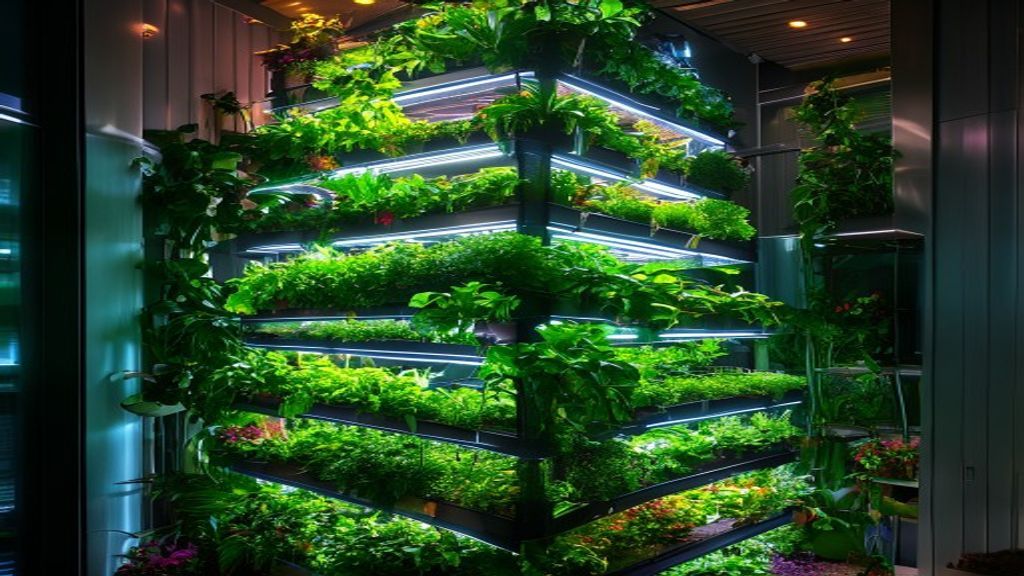
Vertical farming in UAE involves growing crops in stacked layers under artificial LED lighting, typically in climate-controlled indoor environments. It maximizes yield per square metre — up to 10× more than conventional farming — and is especially valuable in the UAE where land and water are scarce. Complete home vertical farms start from AED 400; commercial units from AED 50,000+. Lettuce, herbs, and microgreens are the best crops for UAE vertical farms.
Key Definitions
- Vertical Farm: An indoor growing facility that produces crops in stacked layers using controlled artificial lighting, climate management, and hydroponic or aeroponic systems.
- Controlled Environment Agriculture (CEA): The science and practice of growing crops in a fully enclosed, climate-controlled space. Vertical farming is the most intensive form of CEA.
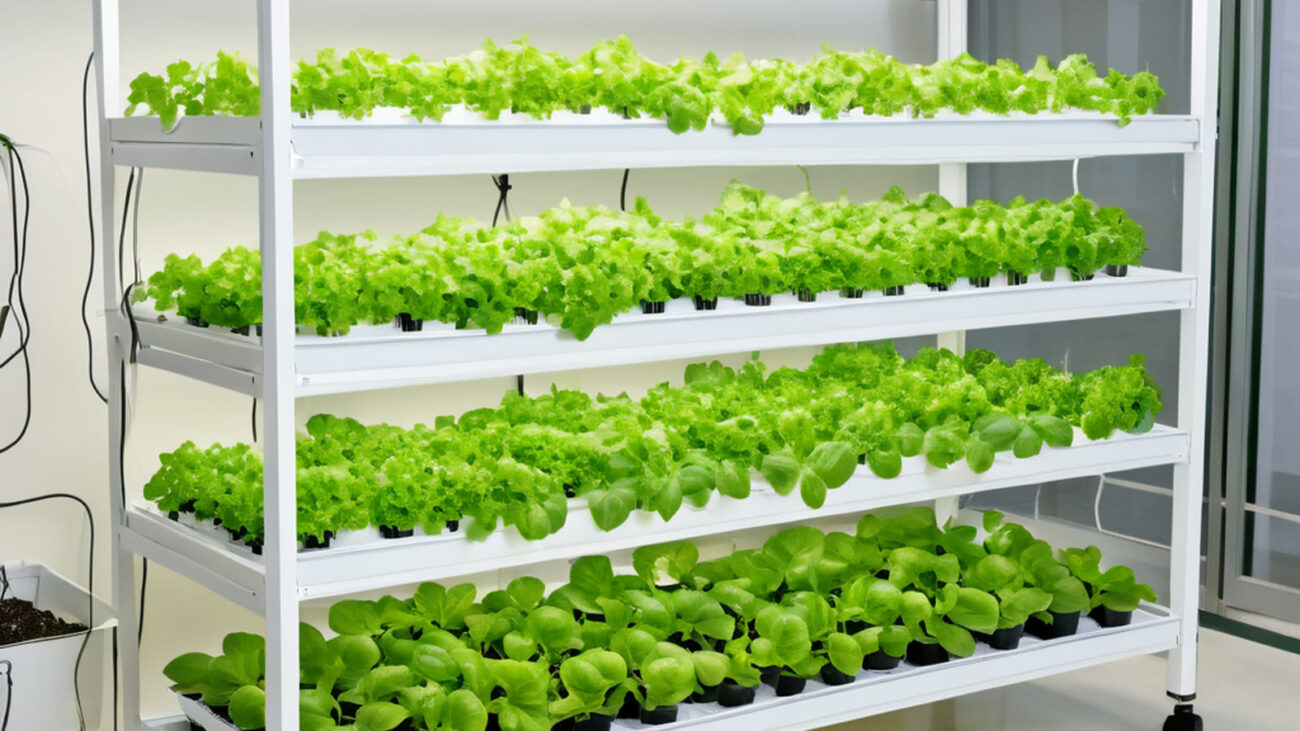
- Vertical NFT: A Nutrient Film Technique system with channels arranged vertically rather than horizontally, multiplying growing area by 3–8× compared to floor-level systems.
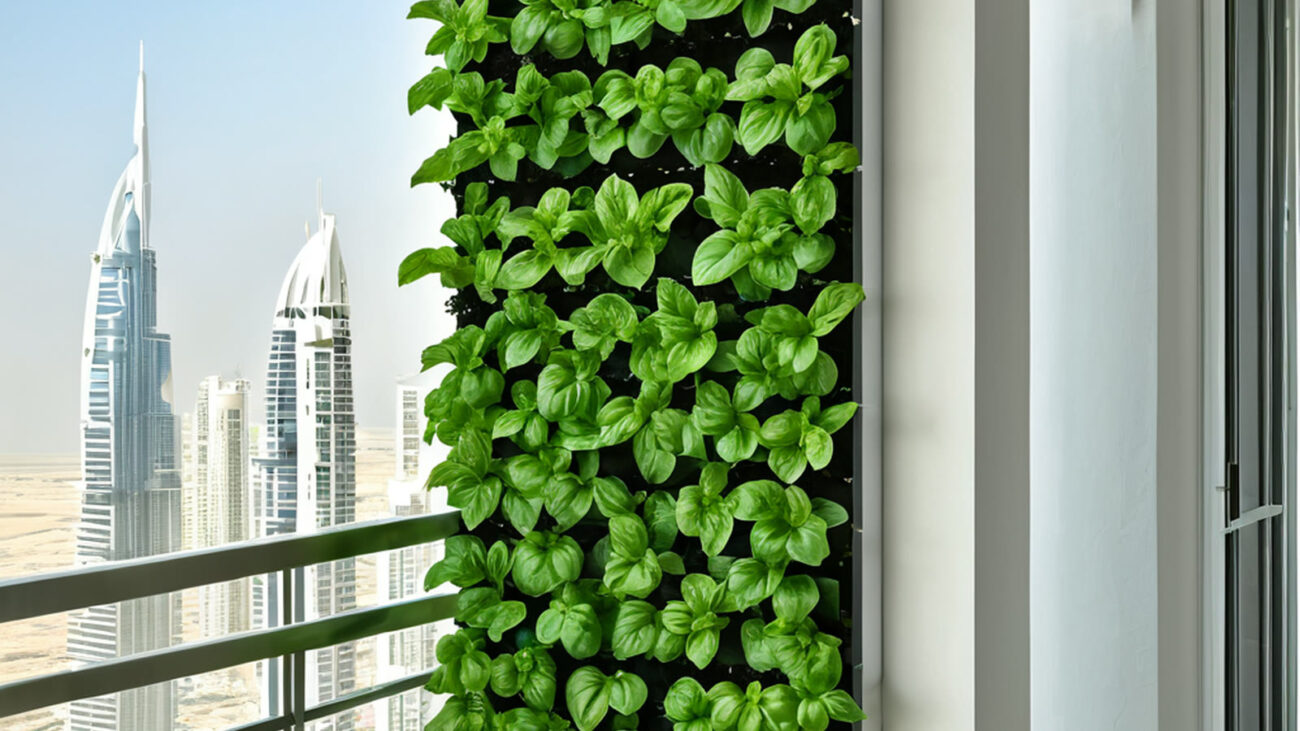
- Aeroponic Tower: A vertical growing structure where plant roots are suspended in air and misted with nutrient solution at intervals. Highly efficient and popular for UAE apartment growing.
- PPFD (Photosynthetic Photon Flux Density): Measurement of light intensity useful to plants, in µmol/m²/s. Leafy greens need 150–350 µmol/m²/s; fruiting crops need 600–1,000+ µmol/m²/s.
Why Vertical Farming is Important for UAE
The UAE imports over 80% of its food, including most fresh vegetables and herbs. The country has limited arable land, intense heat that prevents outdoor cultivation for 4–5 months per year, and scarce freshwater resources. Vertical farming addresses all these challenges simultaneously: it uses up to 95% less water than conventional agriculture, eliminates seasonal limitations through climate control, and produces 10–40× more food per square metre of land. The UAE government has identified vertical farming as a key technology for achieving food security goals outlined in the National Food Security Strategy 2051.
Types of Vertical Farming Systems in UAE
| System Type | Best For | Investment (AED) | Space Required | Difficulty |
|---|---|---|---|---|
| Aeroponic Tower (home) | Herbs, lettuce, strawberries | 400–2,000 | 0.5–1m² footprint | Beginner |
| Vertical NFT Rack | Lettuce, herbs (commercial) | 2,000–15,000 | 2–10m² footprint | Intermediate |
| Stacked DWC Layers | Lettuce, microgreens | 1,500–10,000 | 2–6m² footprint | Intermediate |
| Shipping Container Farm | Commercial leafy greens | 150,000–500,000 | 14–40m² footprint | Advanced |
| Commercial Vertical Farm | Scale production | 500,000+ | Dedicated building | Expert |
Yield Potential of UAE Vertical Farms
| System | Growing Area | Footprint | Lettuce Yield/Year | Water Use vs Soil |
|---|---|---|---|---|
| 2-tier vertical rack (2m²) | 4m² | 2m² | 120–180 heads | 90% less |
| 4-tier vertical system (2m²) | 8m² | 2m² | 240–350 heads | 90% less |
| 6-tier vertical system (4m²) | 24m² | 4m² | 720–1,000 heads | 92% less |
| Aeroponic tower (60 plant) | Equivalent 3m² | 0.3m² | 300–450 heads | 95% less |
| Commercial CEA (100m²) | 600m² (6 tiers) | 100m² | 12,000–18,000 heads | 95% less |
LED Grow Lights for UAE Vertical Farms
LED lighting is the essential enabling technology for vertical farming. In UAE, electricity costs approximately AED 0.23–0.38 per kWh for residential and AED 0.08–0.19 for commercial. LED efficiency directly impacts operating economics:
| Tier/Level | Recommended LED | PPFD Target | Power per m² | Monthly Cost (AED) |
|---|---|---|---|---|
| Leafy greens (single layer) | Full-spectrum 40–60W/m² | 150–300 µmol/m²/s | 40–60W | 4–6 per m² (16h/day) |
| Leafy greens (vertical rack, per layer) | Full-spectrum 30–50W/m² | 150–250 µmol/m²/s | 30–50W | 3–5 per m² |
| Fruiting crops (single layer) | Full-spectrum 80–120W/m² | 600–1,000 µmol/m²/s | 80–120W | 8–12 per m² |
| Microgreens (vertical rack) | 25–40W/m² | 100–200 µmol/m²/s | 25–40W | 2.5–4 per m² |
Step-by-Step: Building a Home Vertical Farm in a UAE Apartment
- Choose location: Spare room, large bathroom, or enclosed balcony. Minimum 2m² floor space for a meaningful system. Needs power outlet and water access.
- Select system: Aeroponic towers (AED 400–2,000) for apartments; NFT vertical rack for larger spaces.
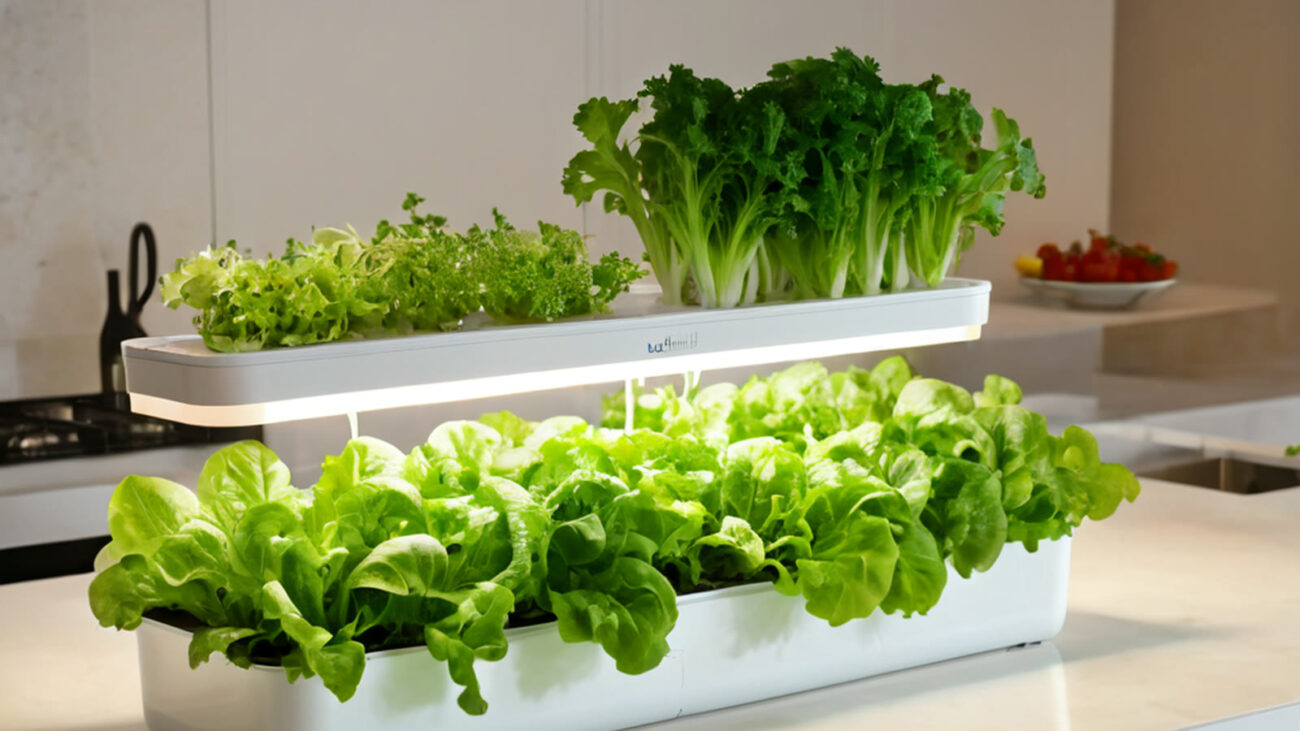
- Install LED lighting: Full-spectrum grow lights mounted above each tier. Calculate power: approximately 40–60W per m² of growing area for leafy greens.
- Set up climate control: A portable AC unit or existing AC must maintain 20–26°C year-round. A small fan provides air circulation to strengthen stems and prevent mildew.
- Set up nutrient system: Mix A+B nutrients in a reservoir, adjust pH to 5.8–6.2 with pH Down (UAE tap water is 7.5–8.5).
- Plant and monitor: Use bolt-resistant lettuce and herb varieties. Check pH and EC daily. Harvest outer leaves continuously for ongoing production.
Commercial Vertical Farming Opportunities in UAE
Several UAE-based vertical farming operations have been established since 2018, including Badia Farms (Dubai), Pure Harvest Smart Farms (Abu Dhabi), and Madar Farms (Dubai). The UAE government actively supports new entrants through ADAFSA licensing, Dubai Municipality urban farming programs, and various food security innovation grants. The market for locally grown, traceable vertical farm produce is growing at over 30% annually in UAE’s premium retail and hospitality sectors.
5 Quotable Facts About Vertical Farming in UAE
- UAE vertical farms can produce 10–40× more food per square metre than conventional outdoor farming, addressing UAE’s land scarcity without expanding the agricultural footprint.
- Vertical farming uses up to 95% less water than field agriculture — a critical advantage in UAE where water scarcity is a national security concern and desalinated water costs 10–15× more than groundwater in most regions.
- UAE vertical farms operate year-round regardless of outdoor temperature, eliminating the 4–5 month summer production gap that outdoor and greenhouse operations face.
- The UAE vertical farming market is projected to reach AED 2.3 billion by 2030 according to market analysis, driven by food security policy mandates and the country’s premium foodservice sector.
- A 100m² UAE vertical farm with 6 growing tiers can produce the equivalent leafy green output of a 600m² conventional greenhouse — demonstrating the 6× land efficiency advantage of vertical stacking.
Frequently Asked Questions
How much space do I need for a home vertical farm in UAE?
A meaningful home vertical farm for herbs and lettuce can be built in as little as 1–2m² of floor space using aeroponic towers or vertical NFT racks. A spare bedroom, walk-in closet, or large bathroom can accommodate a productive system. The key requirement is access to electricity for LED lighting and connection to or proximity to a water source for system maintenance.
What is the difference between vertical farming and hydroponics?
Hydroponics is the method of growing plants without soil using water-based nutrient solutions. Vertical farming is a configuration — growing in stacked layers indoors under artificial light. Virtually all vertical farms use hydroponic (or aeroponic) growing methods. All vertical farms are hydroponic, but not all hydroponics is vertical farming (horizontal NFT channels are not “vertical farms”).
Is vertical farming profitable in UAE?
Yes, for the right crops and scales. UAE’s premium pricing for local produce (AED 25–40/kg for lettuce, AED 50–100/kg for herbs) and high hospitality sector demand support viable economics for well-managed operations. Key success factors: electricity efficiency, high-value crops (herbs over lettuce), direct hospitality/retail sales, and consistent supply. Break-even for a 100m² commercial operation is typically 2–4 years.
References
- UAE National Food Security Strategy 2051 — Emirates Food Security Council
- Despommier, D. — The Vertical Farm: Feeding the World in the 21st Century
- Cornell University — Controlled Environment Agriculture Technology
- ADAFSA — Controlled Environment Agriculture Guidelines
- FAO — Urban Agriculture and Vertical Farming
Shop Hydroponic Equipment — UAE Delivery
Get everything you need to start growing hydroponically with fast delivery across Dubai, Abu Dhabi, Sharjah, and all Emirates:
- NFT Channel System 3m (AED 2,796) — Complete 10-channel growing system
- NFT Channel System 100cm (AED 1,196) — Compact balcony-friendly system
- Dutch Bucket System (AED 50) — Perfect for tomatoes, peppers, cucumbers
- MaxGrow Nutrient A+B (AED 130) — Professional-grade vegetative nutrition
- pH Down Solution (AED 79) — Essential for UAE water
- LECA Clay Pebbles (AED 45) — Premium growing medium