
Hydroponics Blog
Potassium in Hydroponics: Fruit Quality, Deficiency, and Balance

What Potassium Does
Potassium (K) is the quality nutrient. It drives fruit size, flavour, sugar content, shelf life, and disease resistance. It also regulates water movement through the plant (stomatal function) and activates over 60 enzymes. In fruiting crops like tomato, pepper, and strawberry, potassium is increased significantly during flowering and fruiting stages.
Deficiency Symptoms
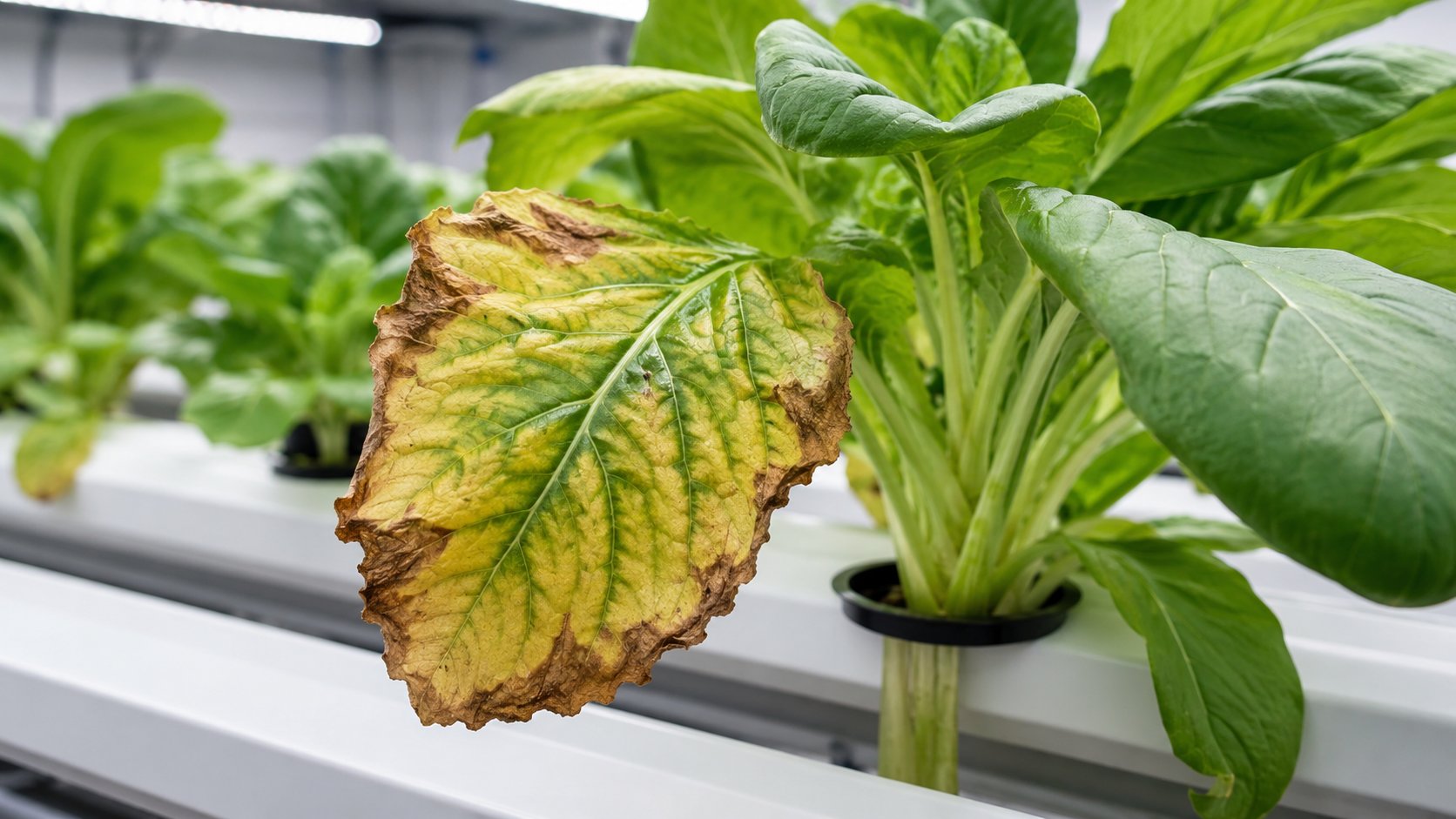
- Brown, scorched leaf margins starting on older leaves
- Interveinal chlorosis on older leaves
- Weak stems, easy wilting under heat stress
- Poor fruit development, reduced brix (sugar content)
- Increased disease susceptibility
Sources in Hydroponics
- Potassium Nitrate KNO₃ — most common. Also provides nitrogen.
- Monopotassium Phosphate KH₂PO₄ — also provides phosphorus.
- Potassium Hydroxide KOH — used as pH Up. Provides potassium but handle with extreme caution — highly caustic.
- Potassium Sulfate K₂SO₄ — used when sulfur is also needed.
Fruiting Stage Potassium Increase
For tomatoes, peppers, cucumbers, and strawberries: increase the K:N ratio during flower and fruit development. Reduce nitrogen-heavy formulas and switch to higher potassium blends or add potassium nitrate. This improves fruit flavour, firmness, and shelf life.
⚠️ Safety note: Potassium hydroxide (KOH / pH Up) is highly caustic. Always add to water — never add water to concentrate. Wear gloves and eye protection.