
Hydroponics Blog
Nitrogen in Hydroponics: Function, Deficiency, Toxicity, and Sources

What Nitrogen Does in Hydroponics
Nitrogen (N) is the most consumed macronutrient in hydroponics. It is the primary driver of vegetative growth — leaves, stems, and overall biomass. It is a core component of amino acids, proteins, chlorophyll, and nucleic acids. Without adequate nitrogen, plants cannot grow.
Deficiency Symptoms
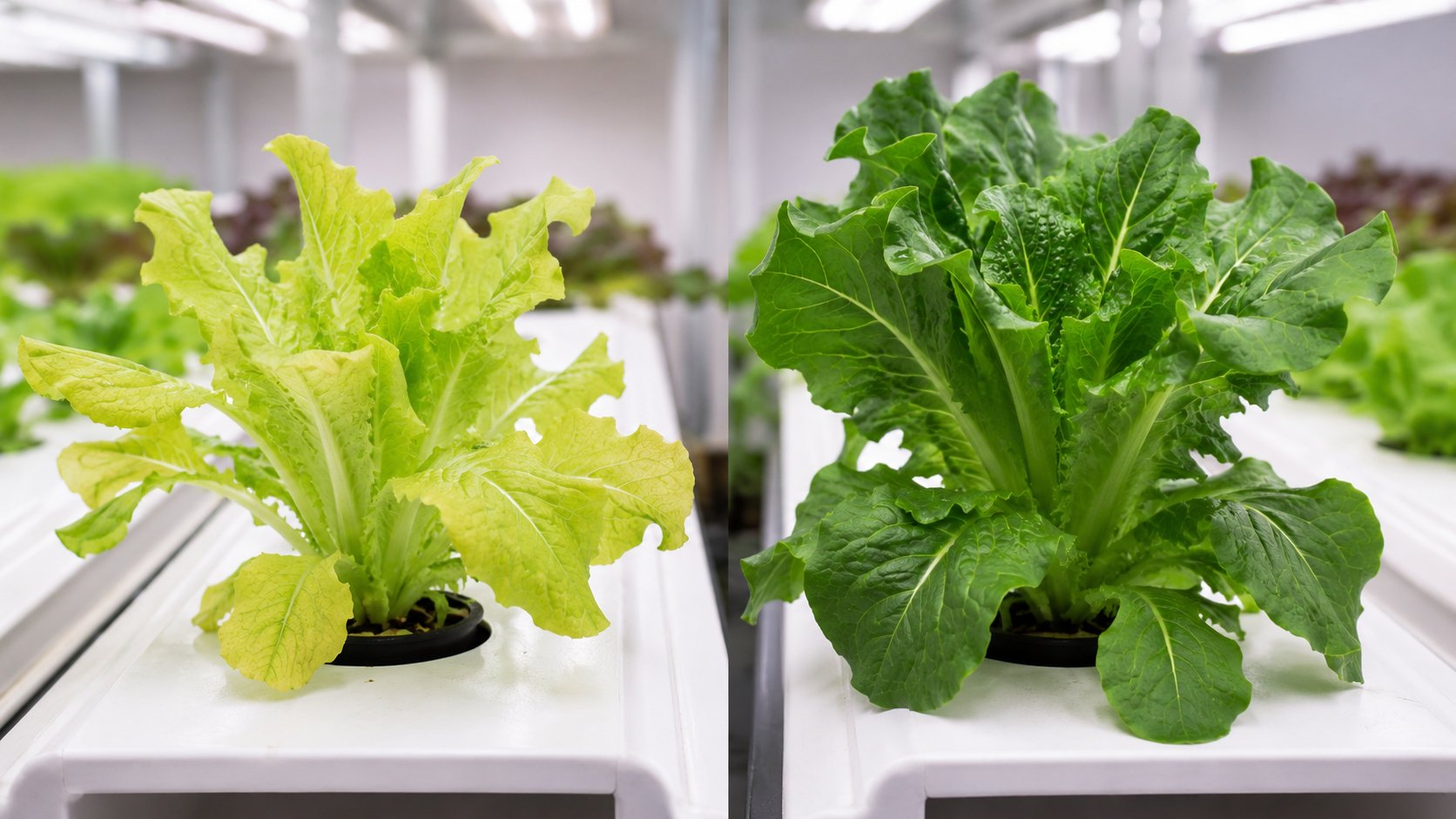
- Pale green or yellow older leaves first (nitrogen is mobile — it moves from old to new tissue)
- Yellowing progresses from oldest to newest leaves as deficiency worsens
- Slow, stunted growth
- Thin, weak stems
- Reduced fruit development
Toxicity Symptoms
- Dark green, almost blue-green leaves
- Excessive vegetative growth with little flowering or fruiting
- Soft, lush tissue more susceptible to pests and disease
- Calcium and potassium uptake reduced by excess nitrogen
Nitrogen Sources in Hydroponics
| Source | Form | Notes |
|---|---|---|
| Calcium Nitrate Ca(NO₃)₂ | Nitrate-N | Most common; also provides calcium. pH-neutral effect. |
| Potassium Nitrate KNO₃ | Nitrate-N | Also provides potassium. Good for fruiting stage. |
| Ammonium Nitrate NH₄NO₃ | Ammonium + Nitrate | Fast availability but lowers pH. Use carefully. |
| Complete commercial formulas | Mixed | Pre-balanced N-P-K ratios. Easiest for beginners. |
Nitrogen Ratios by Growth Stage
- Seedling: Low overall EC (0.8–1.2 mS/cm), balanced nitrogen
- Vegetative: Higher nitrogen relative to phosphorus and potassium
- Flowering/Fruiting: Reduce nitrogen, increase potassium and phosphorus