
Hydroponics Blog
Dutch Bucket Hydroponics UAE 2026: Complete Setup Guide for Tomatoes & Peppers

Quick Answer
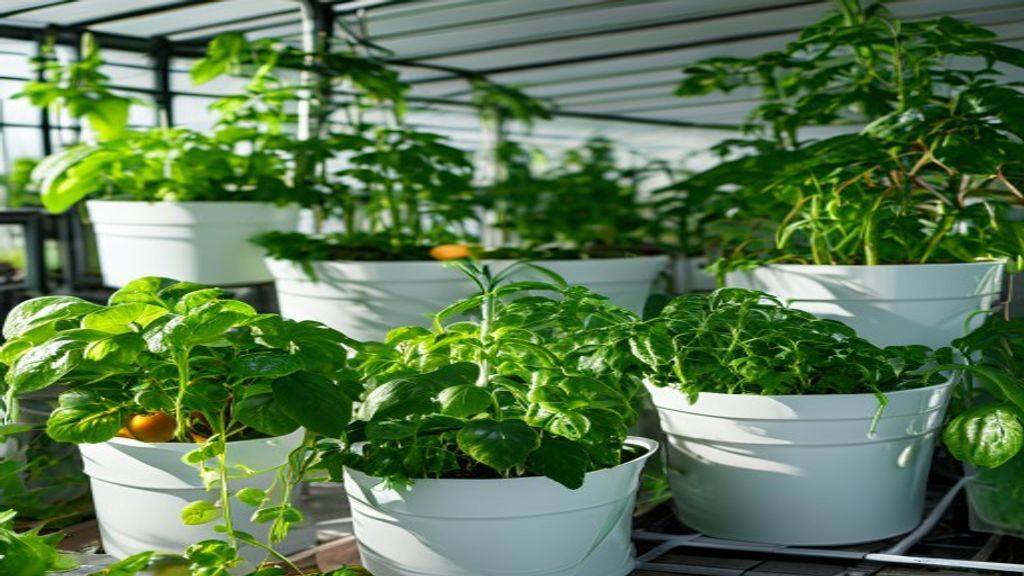
Dutch Bucket hydroponics is the most widely used system for growing tomatoes, peppers, cucumbers, and other large fruiting crops in UAE. Each plant grows in an individual bucket (typically 5–20L) filled with coco perlite or hydroton, fed by a drip system. Complete setup for 10 plants costs AED 400–1,500. Dutch Bucket systems excel in UAE commercial and home grows for fruiting crops that need large root zones and high nutrient delivery.
Key Definitions
- Dutch Bucket (Bato Bucket): A hydroponic system where individual containers (buckets) are connected in series, each holding one large plant in growing media. Drip irrigation delivers nutrient solution; excess drains back to a reservoir.
- Drip System: Irrigation method delivering precise volumes of nutrient solution directly to the base of each plant via thin tubes and drip emitters.
- Coco Perlite Mix: 70% coco peat and 30% perlite — the most popular growing media for UAE Dutch Bucket systems. Good water retention with adequate drainage.
- Indeterminate Tomato: A tomato variety that continues growing and producing fruit throughout the season. Most commercial tomato varieties are indeterminate and require vertical training systems in Dutch Buckets.
- Drain-to-Waste: A Dutch Bucket configuration where excess nutrient solution drains away rather than recirculating to the reservoir. More common in commercial UAE operations for disease management.
Why Dutch Bucket is Ideal for UAE Fruiting Crops
UAE’s extreme heat challenges fruiting crop production, but Dutch Bucket systems address these challenges effectively. Individual buckets allow precise control of each plant’s water and nutrient delivery. The large growing media volume (5–20L per bucket) buffers temperature fluctuations. Drip irrigation delivers cool nutrient solution directly to roots, reducing heat stress. The vertical training structure essential for UAE indoor grows works perfectly with Dutch Bucket systems.
Dutch Bucket System Components
| Component | Function | Specification | UAE Price (AED) |
|---|---|---|---|
| Dutch Buckets | Hold growing media and plant | 10–20L, black, with drain fitting | 20–60 per bucket |
| Main Supply Line | Delivers nutrient solution to all buckets | 25–32mm PVC or poly tube | 5–15 per metre |
| Drip Emitters | Control flow to each bucket | 2–4 L/hr adjustable drip stakes | 2–10 each |
| Drain Pipe | Returns excess solution to reservoir | 32–50mm PVC drain slope | 5–15 per metre |
| Reservoir | Holds nutrient solution | 100–500L black container with lid | 80–300 |
| Water Pump | Circulates solution to buckets | 1,000–3,000 L/hr submersible | 60–200 |
| Timer | Controls irrigation cycles | Digital, 15-minute minimum intervals | 30–80 |
| Trellis/Wire System | Supports plant growth vertically | Galvanized wire, clips, hooks | 50–200 for 10 plants |
Dutch Bucket Setup Guide for UAE
Step 1: System Layout
Plan bucket spacing based on crops: tomatoes need 50–80cm between buckets, peppers 40–60cm, cucumbers 50–70cm. Arrange buckets in a single row or multiple rows with the main supply line running above. Ensure drain pipe has a slight slope (1:100) back to the reservoir. Keep the reservoir as cool as possible — insulate or shade it.
Step 2: Fill Buckets with Growing Media
Use coco perlite mix (70:30) or pure coco peat for most UAE applications. Pre-soak coco peat bricks, drain, and mix with pre-wet perlite. Fill buckets to within 5cm of the top. Rinse hydroton thoroughly if using instead of coco. Make a planting hole in the center for the transplant seedling.
Step 3: Install Drip Irrigation
Run 19mm supply tubing from pump to the first bucket, then 13mm distribution tubing to each bucket. Install 2–4 drip stakes per bucket (2 for small buckets, 4 for large). Set adjustable emitters to deliver 1–2 litres per irrigation cycle. Test flow from each emitter to ensure uniform distribution.
Step 4: Irrigation Scheduling for UAE
| Growth Stage | Irrigations per Day | Duration Each | UAE Summer Note |
|---|---|---|---|
| Seedling (week 1–2) | 3–4 | 1–2 minutes | Reduce in extreme heat to prevent over-saturation |
| Early Vegetative | 4–6 | 2–3 minutes | Monitor media moisture — dries faster in heat |
| Active Vegetative | 6–8 | 3–5 minutes | High frequency essential in summer |
| Flowering/Fruiting | 8–12 | 3–5 minutes | Never let media dry — critical for fruit quality |
| Final Week | 6–8 (plain water) | 3–5 minutes | Flush period improves taste |
Step 5: Nutrient Solution for UAE Dutch Bucket
Use a two-part (A+B) nutrient system. For fruiting crops in UAE summer: target EC 2.5–3.5 mS/cm during fruiting (higher than leafy greens), pH 5.8–6.3. Mix Part A into reservoir water first, then Part B. Adjust pH to 6.0–6.2 with phosphoric acid (pH Down). UAE tip: in extreme summer heat, reduce EC by 0.5 mS/cm to prevent salt stress on roots.
Dutch Bucket Crop Guide for UAE
| Crop | Bucket Size | Plants per Bucket | EC Target (mS/cm) | UAE Yield/Plant/Season |
|---|---|---|---|---|
| Indeterminate Tomatoes | 10–20L | 1 | 2.5–3.5 | 8–20 kg |
| Cherry Tomatoes | 10–15L | 1 | 2.0–3.0 | 5–15 kg |
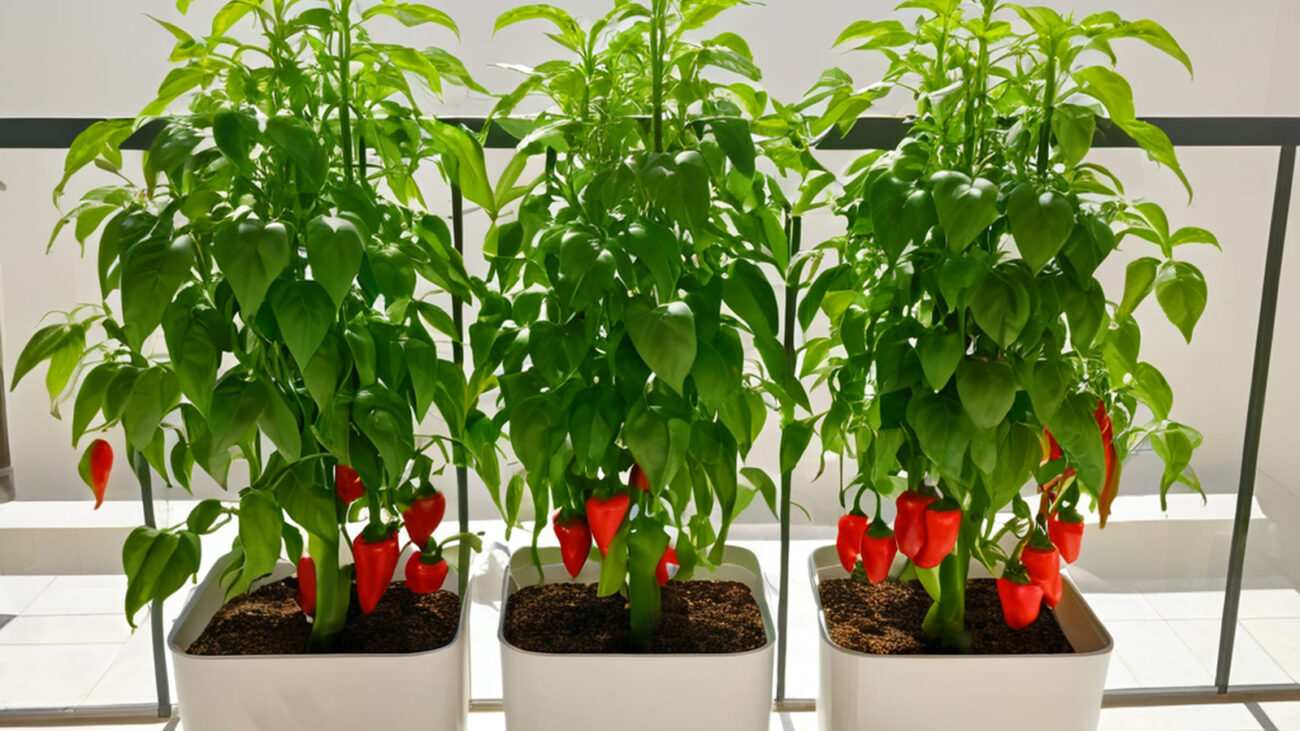
| Bell Peppers | 10–15L | 1 | 2.0–3.0 | 3–8 kg |
| Chilli Peppers | 8–12L | 1–2 | 2.0–3.0 | 1–4 kg |
| Cucumbers | 10–15L | 1 | 1.8–2.5 | 10–20 kg |
| Eggplant (Aubergine) | 10–20L | 1 | 2.0–3.0 | 5–10 kg |
| Large Basil (bush) | 5–8L | 1 | 1.5–2.2 | 0.5–1.5 kg |
Vertical Training Systems for UAE Dutch Bucket Tomatoes
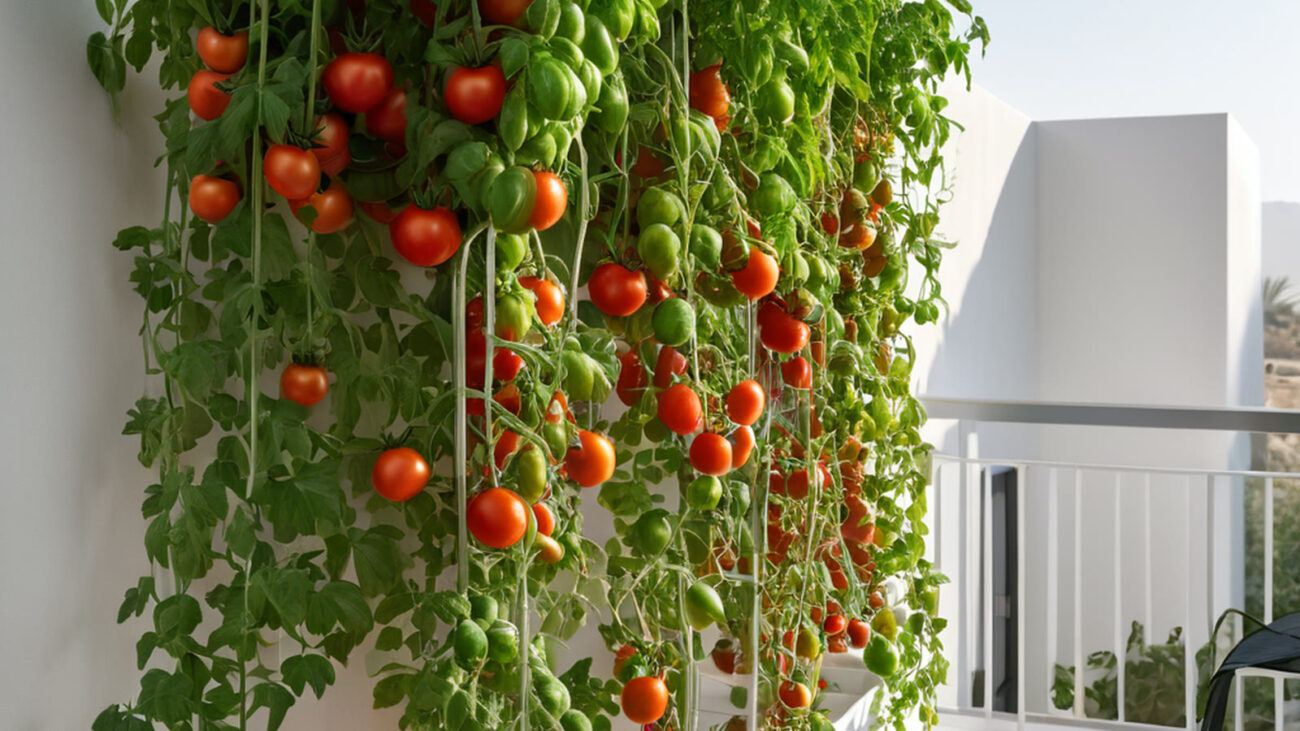
Tomatoes in Dutch Bucket systems must be trained vertically. In UAE indoor grows, run a galvanized wire horizontally overhead at 2.5–3.0m height. Use tomato clips or jute twine to guide the main stem upward. Remove all side shoots (suckers) except one leader or two leaders for a V-cordon system. Lower the plant and wind string around the hook system as the plant grows. Pollination indoors: gently shake flowering clusters daily or use an electric pollinator tool. UAE indoor grows with no bees require manual pollination for fruit set.
Common Dutch Bucket Problems in UAE
| Problem | UAE Cause | Solution |
|---|---|---|
| Root rot in buckets | Water temperature above 22°C in summer | Insulate reservoir, use water chiller, increase drainage |
| Blossom end rot in tomatoes | Calcium deficiency during fruiting | Increase Ca(NO3)2 in Part A; maintain consistent irrigation |
| Clogged drip emitters | Mineral scale from UAE hard tap water | Flush with 5% citric acid solution monthly |
| Uneven plant growth | Unequal drip flow to different buckets | Check and adjust emitter flow rates; replace blocked emitters |
| Rapid EC rise | High evaporation from media surface in UAE heat | Cover media surface with white mulch film; top up reservoir with plain water |
| Salt accumulation in media | UAE tap water sodium/chloride buildup | Full media flush with plain water weekly in summer |
5 Quotable Facts About Dutch Bucket Hydroponics in UAE
- Dutch Bucket hydroponics is the most productive system for tomatoes in UAE commercial greenhouses, with yield potential of 60–80 kg per square metre per year under optimal conditions.
- Individual bucket control allows UAE growers to manage each plant independently — removing diseased plants without contaminating the entire system, which is impossible in NFT or raft DWC systems.
- UAE summer heat makes coco perlite the preferred Dutch Bucket media over rockwool slabs because coco’s organic buffering provides greater resilience against temperature-induced EC spikes.
- Cherry tomatoes are better suited than large beefsteak varieties for UAE Dutch Bucket production because they require 40–50% less manual pollination effort and tolerate warmer indoor temperatures up to 32°C.
- Dutch Bucket drip emitters in UAE systems typically clog 3–5× faster than in lower-mineral-water countries due to calcium and magnesium carbonate precipitation from UAE’s hard tap water.
Frequently Asked Questions
How many Dutch Buckets do I need for a home system in UAE?
A practical home system for family use: 6–10 tomato plants (6–10 buckets), or 8–12 pepper plants, provides a meaningful harvest for a UAE household. This requires approximately 2–4 linear metres of growing space and a 100–200L reservoir. Starting with 4–6 buckets and expanding is common for home growers building experience.
What is better for UAE Dutch Bucket systems — coco peat or hydroton?
Coco perlite mix (70:30) is generally preferred for fruiting crops in UAE Dutch Buckets because its moisture retention better suits the high-frequency drip irrigation needs of tomatoes and cucumbers. Hydroton requires more frequent irrigation cycles (12–15 per day) to maintain adequate moisture. For drip-to-waste systems, coco perlite is standard in UAE commercial operations.
How do I prevent blossom end rot in Dutch Bucket tomatoes in UAE?
Blossom end rot is a calcium deficiency symptom in developing fruit. Prevention: maintain calcium at 200–250 ppm in nutrient solution (increase Ca(NO3)2 dosing during fruiting stage); ensure consistent irrigation — irregular wetting/drying cycles prevent calcium uptake; maintain EC below 3.5 mS/cm (high EC reduces calcium absorption); monitor temperature — extreme UAE heat stress reduces calcium movement to fruit.
Can I use Dutch Bucket for herbs and lettuce in UAE?
Dutch Bucket is technically suitable but is oversized for most herbs and leafy greens. NFT channels or DWC systems are more efficient for lettuce and herbs — using smaller volumes of growing media and providing better nutrient film access. Reserve Dutch Bucket for crops that genuinely need large root zones: tomatoes, peppers, cucumbers, eggplant, and large fruiting vines.
References
- Cornell University — Dutch Bucket Hydroponic Tomato Production
- University of Arizona CEAC — Controlled Environment Production of Fruiting Crops
- Resh, H.M. — Hydroponic Food Production, 7th Edition
- FAO — Protected Agriculture for Vegetable Production
- ADAFSA — Commercial Greenhouse Crop Production in UAE