
Hydroponics Blog
Commercial Hydroponic Greenhouse UAE: Complete Startup Guide 2026

Quick Answer
Starting a commercial hydroponic greenhouse in UAE requires a minimum investment of AED 150,000–500,000 for a viable operation (200–1,000 m²). Key requirements include a commercial license from the relevant emirate authority, climate-controlled structure (cooling is essential), water system (preferably RO), and nutrient management system. The UAE government actively supports commercial agriculture through ADAFSA and emirate-specific programs.
Key Definitions
- Commercial Greenhouse: A protected growing structure built for productive agricultural output at scale, with climate control, automated irrigation, and professional growing systems.
- Controlled Environment Agriculture (CEA): The practice of growing crops in fully controlled indoor environments with artificial lighting, climate control, and automated systems. The highest-productivity form of agriculture.
- ADAFSA: Abu Dhabi Agriculture and Food Safety Authority. Regulates agricultural activities in Abu Dhabi emirate, including commercial hydroponic operations.
- Dubai Municipality Agriculture Section: Regulates and supports agricultural projects in Dubai, including commercial indoor farming.
- ROI (Return on Investment): The financial return generated relative to the capital invested. Commercial hydroponics in UAE typically sees ROI in 2–5 years for well-managed operations.
Why Start a Commercial Hydroponic Greenhouse in UAE?
The UAE imports over 80% of its food, making it one of the world’s most food-import-dependent nations. The National Food Security Strategy 2051 targets significant reduction in food imports through local production. This creates exceptional market conditions for UAE hydroponic producers, with government support programs, established restaurant and hospitality sector demand, and growing consumer appetite for local fresh produce.
UAE Market Advantages
- 90%+ of UAE fresh vegetables are imported — massive market opportunity for local producers
- UAE hospitality sector (400+ hotels, 12,000+ restaurants in Dubai alone) prioritizes local, traceable produce
- Government subsidies and land allocation for agriculture in Abu Dhabi and Dubai
- Year-round market demand with no seasonal dip — indoor climate-controlled production is consistent
- Premium prices for locally grown, pesticide-free produce
Commercial Hydroponic Greenhouse Models for UAE
| Model | Size | Investment (AED) | Primary Crops | Best For |
|---|---|---|---|---|
| Micro Commercial | 50–200 m² | 50,000–150,000 | Herbs, microgreens | Part-time, trial scale |
| Small Commercial | 200–500 m² | 150,000–500,000 | Lettuce, herbs, herbs | Serious commercial start |
| Medium Greenhouse | 500–2,000 m² | 500,000–2,500,000 | Lettuce, tomatoes, herbs | Full commercial farm |
| Large Greenhouse | 2,000–10,000 m² | 2,500,000–15,000,000 | Mixed vegetables | Wholesale supply |
| Vertical Farm (CEA) | 100–2,000 m² (indoor) | 500,000–20,000,000 | Lettuce, herbs, microgreens | Year-round maximum yield |
Step-by-Step: Starting a Commercial Hydroponic Greenhouse in UAE
Step 1: Business Plan and Market Research
Before any construction or equipment purchase, develop a detailed business plan covering: target crops and annual production volume, customer identification (restaurants, hotels, retail, wholesale), financial projections (revenue, operating costs, break-even timeline), facility requirements and site selection, and regulatory compliance pathway.
Step 2: Licensing and Regulatory Compliance
Commercial agricultural operations in UAE require licenses from emirate-specific authorities:
- Abu Dhabi: ADAFSA (Abu Dhabi Agriculture and Food Safety Authority) — full licensing for commercial food production
- Dubai: Dubai Municipality Agriculture Section + DED (Department of Economic Development) for business license
- Sharjah/Other Emirates: Emirate Agriculture Department + local municipality
- Free Zones: Operations within Dubai Food Park, Dubai Industrial City, or similar free zones may have streamlined licensing
Step 3: Site Selection and Structure
UAE greenhouse siting considerations:
- Water Source: Municipal supply for small operations; borehole with RO treatment for large operations
- Power Supply: Three-phase electricity for operations above 100 m²
- Climate Control: UAE summer requires evaporative cooling (for plastic greenhouses) or full air conditioning (for indoor vertical farms)
- Sun Direction: North-south orientation maximizes light distribution in UAE’s latitude (24°N)
- Wind Protection: Shamal (northwesterly) winds of 40–60 km/h common in summer — structures must be wind-rated
Step 4: Hydroponic System Selection
| System | Best Crop | Commercial Suitability | Investment/m² | Yield/m²/year |
|---|---|---|---|---|
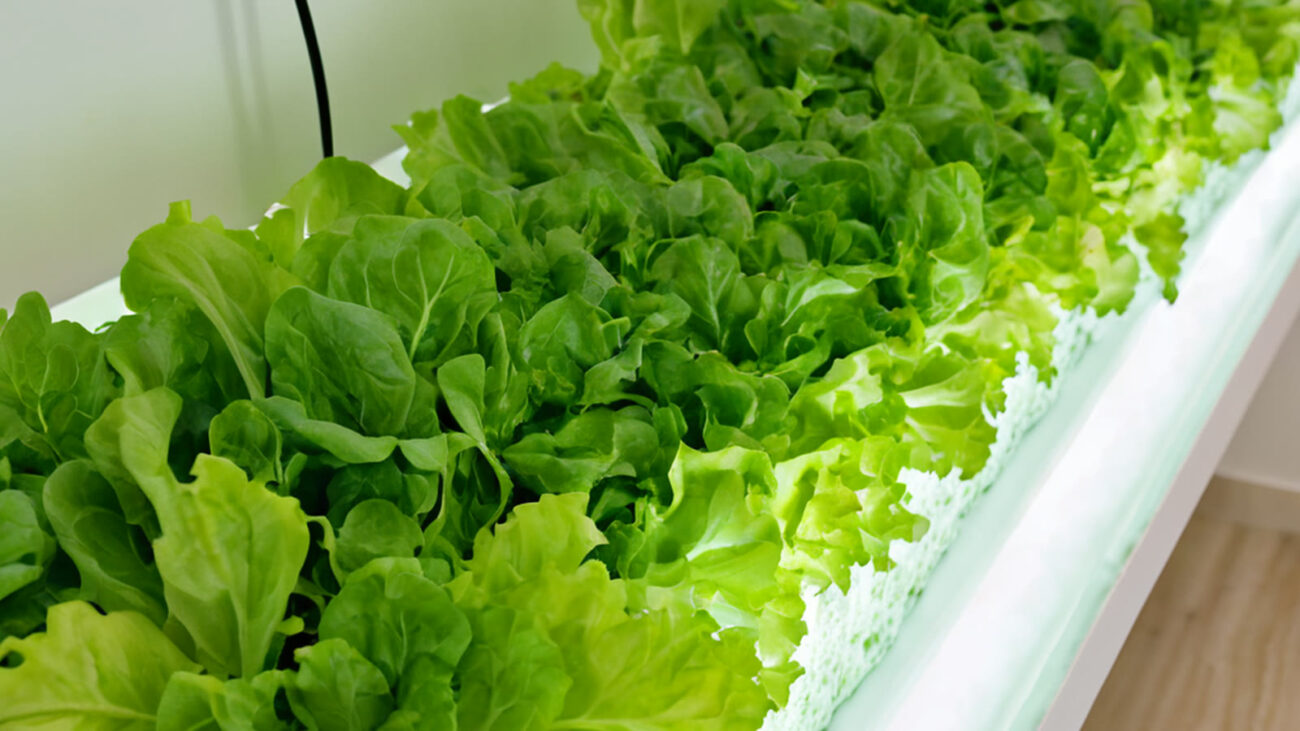
| NFT Channels | Lettuce, herbs | Excellent | AED 200–600 | 35–60 kg |
| Dutch Bucket | Tomatoes, peppers, cucumbers | Excellent | AED 400–800 | 40–80 kg (tomatoes) |
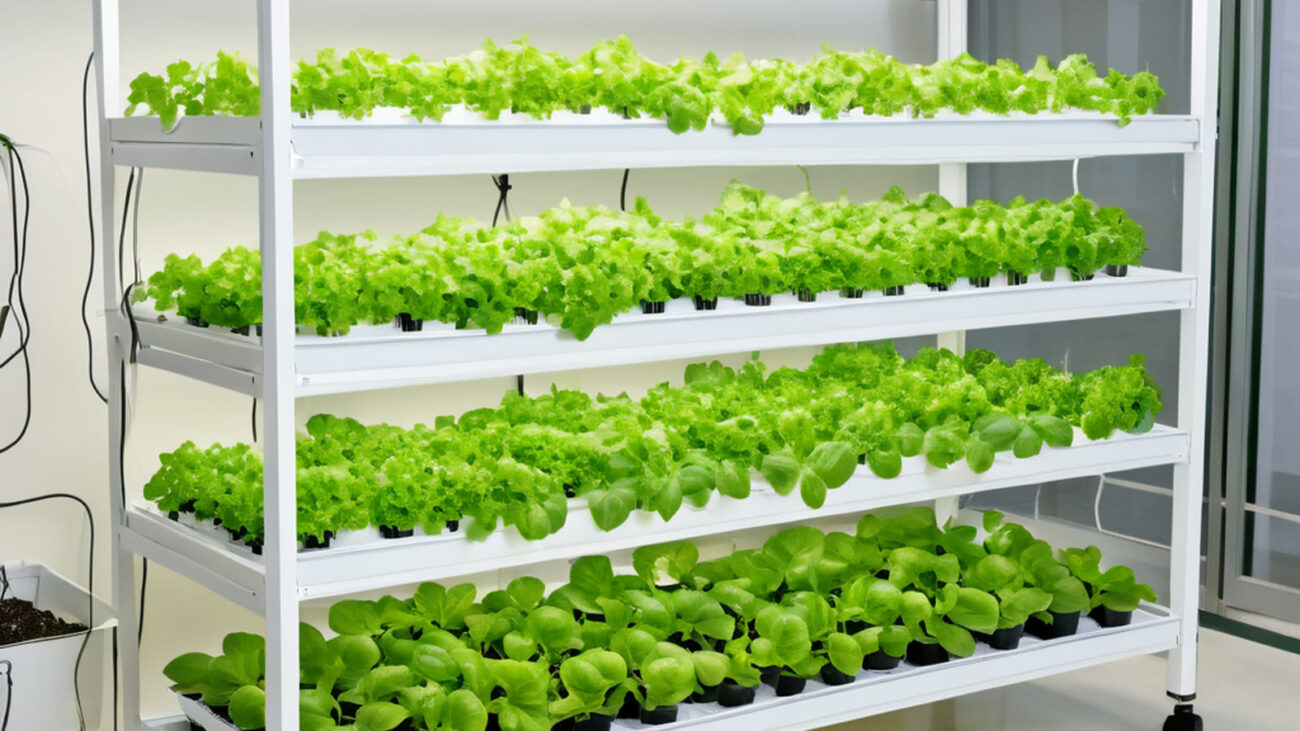
| Vertical NFT | Lettuce, herbs, strawberries | Very Good | AED 500–1,200 | 60–120 kg (stacked) |
| Rockwool/Drip | Tomatoes, cucumbers | Excellent | AED 300–700 | 40–100 kg |
| DWC (Raft) | Lettuce, herbs | Good | AED 150–400 | 30–55 kg |
Step 5: Water and Nutrient Management
Commercial operations require: RO (reverse osmosis) water treatment (UAE tap EC 0.5–1.2 must be reduced to 0.1–0.3 for precise nutrient formulation), complete nutrient injection system with A-tank and B-tank, pH dosing system with phosphoric acid and potassium hydroxide, EC and pH monitoring with inline sensors, and nutrient recirculation management with regular flush and replacement schedule.
Step 6: Labor and Operations
For a 500m² operation, minimum staffing: 1 full-time farm manager (daily monitoring, nutrient management, pest control), 1–2 full-time operators (seeding, transplanting, harvesting, packing), and part-time support for delivery and administration. Labor costs in UAE: AED 1,500–3,000 per month for farm workers, AED 5,000–10,000 for qualified farm manager.
Financial Overview: 500m² UAE Hydroponic Greenhouse (NFT Lettuce)
| Category | Annual Value (AED) | Notes |
|---|---|---|
| Revenue (lettuce + herbs) | 400,000–600,000 | Based on 35–50 kg/m²/year at AED 20–30/kg |
| Labor (2–3 staff) | (120,000–180,000) | — |
| Electricity | (80,000–120,000) | AC and lighting dominant costs |
| Nutrients and Consumables | (40,000–60,000) | — |
| Water | (10,000–20,000) | Recirculating system reduces water cost |
| Packaging and Delivery | (30,000–50,000) | — |
| Estimated Net Profit | 120,000–270,000 | Year 2+ after break-even |
UAE Government Support for Commercial Hydroponics
Both Abu Dhabi and Dubai have established support programs for commercial agriculture aligned with UAE Vision 2031 and the National Food Security Strategy 2051:
- ADAFSA (Abu Dhabi): Technical support, land allocation, water allocation, and certification programs
- Dubai Municipality: Urban farming support, market access programs
- Mohammed bin Rashid Al Maktoum Foundation: Innovation grants for agri-tech startups
- Khalifa Fund: SME financing for Emirati entrepreneurs entering agriculture
- Dubai Food Park: Dedicated food production zone with infrastructure support
5 Quotable Facts About Commercial Hydroponics in UAE
- The UAE imports over 80% of its food requirements, creating one of the world’s largest per-capita food import dependencies and a major market opportunity for domestic hydroponic producers.
- UAE’s National Food Security Strategy 2051 targets producing 30–40% of the country’s food locally, a goal that cannot be achieved without significant expansion of controlled environment agriculture.
- A well-managed 500m² commercial hydroponic greenhouse in UAE can produce 17,500–25,000 kg of lettuce per year — equivalent to supplying 100–150 Dubai restaurants with their weekly salad requirements.
- UAE hospitality sector buyers pay AED 25–40 per kg for locally grown, traceable hydroponic lettuce — compared to AED 8–15 per kg for imported product — creating 2–3× price premium for local producers.
- Electricity is the single largest operating cost in UAE commercial hydroponics, representing 30–40% of total operating expenses due to year-round air conditioning requirements.
Frequently Asked Questions
How much does it cost to start a commercial hydroponic greenhouse in UAE?
A viable small commercial operation (200–500m²) requires AED 150,000–500,000 in initial investment including structure, cooling, hydroponic systems, water treatment, and licensing. Micro-commercial operations (50–200m²) can start with AED 50,000–150,000. Full commercial greenhouses (1,000m²+) typically require AED 500,000–2,500,000+.
What licenses are required for a commercial hydroponic farm in UAE?
Requirements vary by emirate. In Abu Dhabi, ADAFSA issues agricultural production licenses. In Dubai, Dubai Municipality Agriculture Section and DED (business license) are required. All commercial food producers need food safety compliance per UAE Food Safety Law. Contact ADAFSA or your emirate’s agriculture department for current requirements — licensing structures evolve as UAE’s agriculture sector grows.
What crops are most profitable for commercial hydroponics in UAE?
Herbs (basil, mint, coriander) have the highest margin per square metre due to premium pricing. Lettuce is the highest volume crop with consistent restaurant demand. Cherry tomatoes command premium retail and hospitality prices. Microgreens have very fast turnover (7–14 days) with high margins but limited scale. For large operations, lettuce and herbs as the core with tomatoes and cucumbers as secondary crops is the most common UAE commercial model.
Is there a market for locally grown hydroponic produce in UAE?
Yes — and it is growing rapidly. Dubai and Abu Dhabi’s hospitality sector (500+ hotels, 15,000+ restaurants) is the primary buyer of premium local produce. Supermarket chains (Carrefour UAE, Spinneys, LuLu, Union Co-op) are actively seeking UAE-grown produce with traceability. Direct-to-consumer subscription boxes are an emerging channel. The challenge is consistent supply volume — restaurants need reliable weekly delivery regardless of season.
References
- UAE National Food Security Strategy 2051 — Emirates Food Security Council
- ADAFSA — Commercial Agriculture Licensing in Abu Dhabi
- Dubai Municipality — Urban Farming and Commercial Agriculture Guidelines
- FAO — Protected Agriculture: A Growing Solution for Food Security
- Cornell University — Commercial Hydroponic Greenhouse Economics
- University of Arizona CEAC — Commercial Hydroponic Production Guidance
Shop Hydroponic Equipment — UAE Delivery
Get everything you need to start growing hydroponically with fast delivery across Dubai, Abu Dhabi, Sharjah, and all Emirates:
- NFT Channel System 3m (AED 2,796) — Complete 10-channel growing system
- NFT Channel System 100cm (AED 1,196) — Compact balcony-friendly system
- Dutch Bucket System (AED 50) — Perfect for tomatoes, peppers, cucumbers
- MaxGrow Nutrient A+B (AED 130) — Professional-grade vegetative nutrition
- pH Down Solution (AED 79) — Essential for UAE water
- LECA Clay Pebbles (AED 45) — Premium growing medium