Hydroponics Blog
Rooftop Hydroponics UAE: Urban Farming on Dubai & Abu Dhabi Rooftops

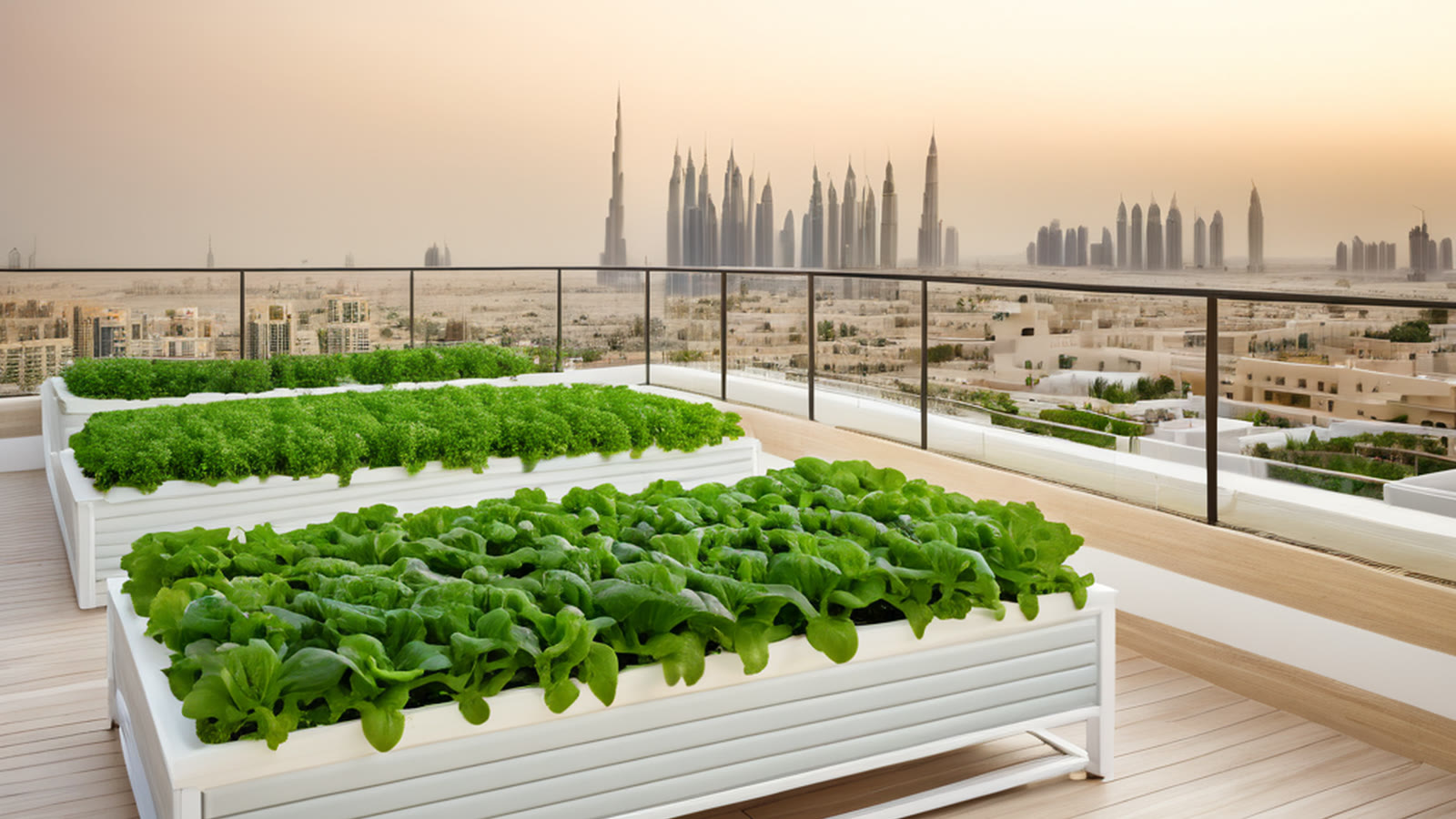
Every flat rooftop in Dubai, Abu Dhabi, Sharjah, and across the UAE is a potential food production zone. Rooftop hydroponics — growing vegetables, herbs, and fruits on building tops using soil-free systems — is transforming urban food security across the UAE and the world. From a small family home in Deira to a commercial building in Business Bay, rooftop space is the UAE’s most underutilised agricultural asset.
Why Rooftop Hydroponics Works in the UAE
UAE rooftops receive 10–12 hours of direct sunlight for most of the year — more than almost any agricultural region on Earth. This free solar energy drives photosynthesis powerfully. The flat-roof architecture standard across Dubai, Abu Dhabi, Sharjah, Ajman, and most UAE buildings provides easy access and structural support. UAE municipalities are increasingly supportive of rooftop food production as part of the national food security agenda.
The same rooftop farming movement is accelerating globally: Singapore high-rises, New York City commercial rooftops, Cape Town South Africa community gardens, and Houston Texas urban farms all demonstrate what UAE rooftops can achieve. The UAE has a significant advantage: year-round sunshine and growing season from October to May without any infrastructure heating costs.
What to Grow on UAE Rooftops
The UAE winter growing season (October–April) is exceptional for rooftop production. Leafy greens — lettuce, spinach, rocket, kale — grow explosively in the 20–30°C rooftop temperatures during these months. Herbs — basil, mint, parsley, coriander — produce prolifically. Tomatoes, cucumbers, peppers, and aubergines thrive in the warm conditions, especially in December through March when temperatures across Dubai, Abu Dhabi, and the northern emirates are ideal.
Summer growing (May–September) requires shade netting (50–70% shade cloth) to protect plants from intense direct sun and temperatures above 40°C. Heat-tolerant varieties — cherry tomatoes, long beans, okra, sweet potato leaves — can continue producing through UAE summer with appropriate management.
Best Hydroponic Systems for UAE Rooftops
Vertical tower gardens — The most space-efficient rooftop system. A row of 10 vertical towers in a 10sqm rooftop space produces the equivalent of 100sqm of traditional garden area. Minimal water use, no soil weight on the structure, and easy to relocate if needed. Perfect for Dubai residential villas and Abu Dhabi townhouses.
NFT channels on raised benches — The professional standard for UAE rooftop commercial and semi-commercial production. Nutrient film flows through angled channels, feeding plant roots continuously. Highly water-efficient (recirculating systems use 95% less water than soil), easily scalable, and produces excellent yields. Used by Dubai’s growing number of rooftop micro-farms supplying local restaurants and farmers markets.
Grow bags with drip irrigation — The most accessible entry point for UAE homeowners. Fill UV-resistant bags with coco peat, connect a simple drip irrigation system, and grow any vegetable. AED 200–500 sets up a productive system for a small home rooftop. No structural modifications required.
Dutch bucket systems — For serious UAE rooftop growers targeting tomatoes, cucumbers, and peppers at scale. Each bucket holds one plant with perlite or coco, fed by drip. A 20-bucket system on a 30sqm rooftop can produce 50–80kg of tomatoes per season — enough for a UAE family plus surplus to sell.
UAE Rooftop Growing: Structural and Regulatory Considerations
Before setting up a UAE rooftop farm, confirm your building can support the weight. Hydroponic systems are far lighter than soil gardens — a coco peat grow bag system adds 20–40kg per sqm versus soil at 150–200kg per sqm. In Dubai and Abu Dhabi, most flat-roof residential buildings can easily support hydroponic rooftop installations without structural changes.
Check your building management company’s rules regarding rooftop access and modifications. Most UAE master developers (Emaar, Aldar, Nakheel, etc.) allow personal use of rooftop space by villa owners. For apartment buildings, written permission from building management is recommended before setting up any permanent installation.
Water Efficiency: Why UAE Rooftop Hydroponics Makes Sense
The UAE is one of the most water-scarce countries on Earth. Conventional soil gardening uses 10–15 litres of water per kg of vegetables produced. Recirculating hydroponic systems use 1–2 litres per kg — a 90% water saving. In a country where water costs AED 0.30–5.85 per cubic metre (depending on source) and desalination is the primary supply, hydroponic rooftop growing is an environmentally and economically superior choice.
Build Your UAE Rooftop Hydroponic Farm
- Mr. Stacky Vertical Tower Garden — the most popular UAE rooftop tower system
- Coco Peat 5kg — lightweight, excellent rooftop growing medium
- NPK 12-12-17 Fertilizer — professional nutrients for rooftop vegetable production
- RO Water UAE — clean base water for rooftop nutrient systems
Plan your UAE rooftop farm with UAE Hydroponics — system design consultation available, delivering across all 7 emirates.
🌿 More UAE Hydroponics Guides
- → Start Your Commercial Hydroponic Greenhouse in UAE: Complete Business Setup Guide 2025
- → Luxury Hydroponic Garden UAE 2026: Premium Indoor Farm Design for Dubai Villas, Penthouses & Large Homes
- → Where to Buy Hydroponic Supplies Near Me UAE 2026: Same-Day Delivery Dubai, Abu Dhabi & Sharjah
- → Hydroponic System Failures UAE — How to Prevent & Fix Equipment Issues
Shop all supplies at UAE Hydroponics Store — Fast delivery to Dubai, Abu Dhabi, Sharjah, Ajman, RAK & Fujairah.