
Hydroponics Blog
Hydroponics Farming UAE: Guide to Desert Hydroponics

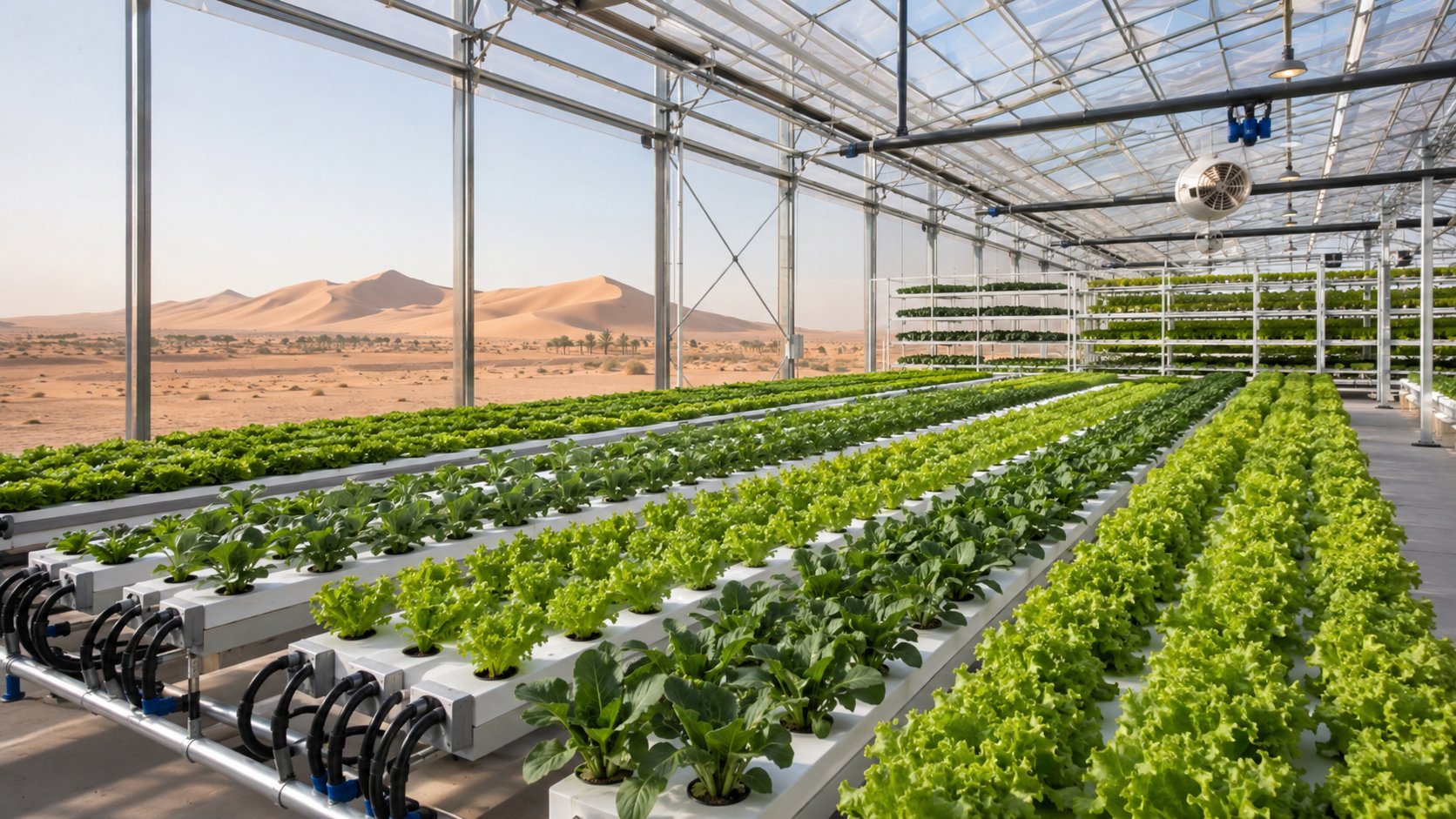
The UAE’s advancement in agricultural technology has led to a growing interest in hydroponics farming UAE, especially given the country’s arid desert climate and limited arable land. Traditional soil-based farming encounters significant challenges in this region due to extreme heat, scarce water resources, and poor soil quality. Hydroponic agriculture UAE offers a sustainable, high-efficiency alternative, enabling local food production while conserving water and space.
For growers aiming to understand this innovative method, the question remains: how to grow hydroponic farming UAE systems that are effective and adapted to desert conditions? This guide walks through the essentials of hydroponics farming UAE, covering key systems, crops, climate considerations, and best practices specific to the UAE’s hot and dry environment. Whether you are a commercial farmer, hobbyist, or a stakeholder in smart farming, this comprehensive resource is designed to equip you with actionable knowledge to boost productivity and sustainability.
Quick Answer
Hydroponics farming UAE is a soilless cultivation method that uses nutrient-rich water solutions to grow plants efficiently in limited water and space settings—perfect for the UAE’s desert environment. This approach maximizes water usage, minimizes land needs, and allows year-round crop production, particularly leafy greens, herbs, and vegetables. By leveraging hydroponics equipment Dubai providers and vertical farming UAE innovations, growers can implement systems tailored to the harsh climate. Careful management of key parameters like water pH (5.5-6.5), electrical conductivity (1.5-2.5 mS/cm), and temperature (18-28°C) ensures successful yields in hydroponic vegetable farming and desert farming hydroponics operations across the UAE.
What Is Hydroponics Farming UAE?
Hydroponics farming UAE refers to the practice of growing plants without traditional soil, instead using a nutrient-enriched water solution that delivers all essential elements directly to the roots. Its rise in the UAE stems from the need to tackle desert conditions, water scarcity, and land constraints that limit conventional agriculture. Hydroponic agriculture UAE uniquely suits environments where soil quality is poor or absent, such as the UAE’s desert landscapes.
Unlike soil farming, hydroponics involves carefully controlled environments—often indoor or greenhouse settings—with systems such as nutrient film technique (NFT), deep water culture (DWC), or aeroponics. These setups allow precise tuning of critical growth conditions including: nutrient concentration, pH levels, oxygenation, temperature, and light.
In the UAE, hydroponic farms integrate modern technologies like climate control, smart sensors, and automated irrigation, often found in smart farming hydroponics initiatives. Hydroponics UAE farms range from small-scale setups in urban areas to commercial vertical farming UAE projects that maximize vertical space for higher productivity. This soil-less method can yield crops more rapidly than soil farming and uses up to 90% less water, a vital advantage in desert farming hydroponics.
Why Hydroponics Farming UAE Matters
Hydroponics farming UAE is a game-changer for food security amid rising population demands and climate challenges. The UAE’s desert climate creates severe hurdles for traditional agriculture, including extreme temperatures, infertile soil, and limited freshwater. Hydroponic farming overcomes these constraints while delivering multiple economic and environmental benefits.
Firstly, hydroponic agriculture UAE uses water much more efficiently. By recycling nutrient solutions and reducing evaporation, it can consume up to 90% less water compared to soil farming—a critical factor in arid regions. Secondly, vertical farming UAE solutions reduce land use by stacking crops vertically, enabling urban food production near consumers, reducing transportation costs, and improving freshness.
Additionally, controlled environment agriculture enhances year-round crop production, improving yields and reducing dependency on imports. It also decreases pesticide and herbicide need since the growing medium is sterile, leading to healthier produce. Hydroponics UAE farms boast higher growth rates—plants can mature 20-25% faster than soil-grown counterparts under optimal conditions.
The ability to grow a variety of crops indoors or in greenhouses also supports the UAE’s vision of sustainable agriculture and self-reliance. Governments and private sectors actively invest in hydroponics equipment Dubai suppliers and vertical farming UAE technologies, aiming to reduce the ecological footprint and enhance food sovereignty.
Step-by-Step Guide to Starting Hydroponics Farming UAE
Successful hydroponic farming UAE requires careful planning and management of environmental and nutritional factors. The following step-by-step guide highlights essential milestones and parameters for initiating a productive hydroponic operation in desert conditions.
| Step | Description | Key Parameters | Reference Range |
|---|---|---|---|
| 1. Choose Growing System | Select from NFT, DWC, ebb and flow, aeroponics based on space, budget, and crop type | N/A | N/A |
| 2. Select Crops | Pick plants suited for hydroponics and UAE climate, e.g., lettuce, kale, basil, tomatoes | N/A | N/A |
| 3. Setup Climate Control | Install shading, ventilation, cooling to maintain ideal air temp in hot desert climate | Temperature | 18–28°C |
| 4. Prepare Nutrient Solution | Mix hydroponic nutrient formula ensuring balanced macro and micronutrients | pH & Electrical Conductivity (EC) | pH: 5.5–6.5; EC: 1.5–2.5 mS/cm |
| 5. Monitor Water Quality | Regularly check pH, EC, dissolved oxygen levels | Dissolved Oxygen | >6 mg/L |
| 6. Install Lighting (if indoors) | Use LED grow lights or natural sunlight supplementation as needed | Light Intensity | 200–400 μmol/m²/s (photosynthetic photon flux density) |
| 7. Plant and Maintain | Transplant seedlings, adjust nutrient supply, observe growth & pest status | N/A | N/A |
| 8. Harvest and Rotate | Harvest mature crops, clean system, and prepare for next cycle | N/A | N/A |
These steps form the backbone of hydroponic farming UAE success. Real-time monitoring using sensors and automated control systems—as seen in UAE smart farming hydroponics projects—can further enhance precision and efficiency. Always ensure water quality meets the standards to prevent crop stress or diseases.
Best Systems and Crops for Hydroponics Farming UAE
When selecting systems and crops suited for hydroponics farming UAE, it is crucial to consider the desert environment, resource availability, and crop economics. The table below summarizes popular systems and recommended crops.
| Hydroponic System | Advantages | Recommended Crops |
|---|---|---|
| Nutrient Film Technique (NFT) | Low water use, efficient nutrient delivery, good for leafy greens | Lettuce, spinach, basil, arugula |
| Deep Water Culture (DWC) | Simple setup, excellent oxygen supply to roots | Herbs like mint, cilantro; leafy greens |
| Ebb and Flow (Flood and Drain) | Flexibility for various crops, good aeration | Tomatoes, peppers, cucumbers |
| Aeroponics | Maximized oxygen exposure, rapid growth rates | Leafy greens, strawberries, herbs |
| Vertical Farming Systems | Maximizes space, integrates well with urban areas | Lettuce, microgreens, herbs |
Leafy greens and herbs are the most common crops due to their short growth cycles and sensitivity to salt stress. For hydroponic vegetable farming in the UAE, tomatoes and cucumbers offer higher-value options but require more system management and nutrient control.
Hydroponics equipment Dubai suppliers provide modular systems tailored to these crops, enabling growers to scale operations. Combined with vertical farming UAE techniques, growers can optimize limited space and exploit technological advancements for increased yields.
UAE and Desert Climate Notes for Hydroponic Farming
The UAE’s desert climate poses unique challenges and opportunities for hydroponic farming. Temperatures can soar above 45°C in summer, with very low humidity and high solar radiation. Water scarcity remains a critical constraint, with agriculture consuming over 80% of total freshwater resources. Hydroponics enables smart farming hydroponics approaches tailored to these harsh conditions by significantly lowering water consumption and mitigating extreme weather impacts.
Ensuring temperature control is paramount. Greenhouses or controlled environment facilities often utilize shading nets, evaporative cooling pads, and fans to maintain air temperature ideally between 18-28°C. Nutrient solution temperature should similarly be regulated, as root zone temperatures above 28°C stress plants and below 18°C slow nutrient uptake.
Despite high ambient solar exposure, supplemental LED lighting is often needed during short daylight hours or indoors to maintain optimal light levels (200-400 μmol/m²/s). Water source quality in the UAE can vary; often desalinated or treated groundwater is used, requiring filtration and constant monitoring to prevent salt accumulation in nutrient solutions.
In desert farming hydroponics, frequent system cleaning prevents salt buildup, and closed-loop systems reduce water loss. Additionally, integrating renewable energy sources such as solar panels can reduce operational costs and improve sustainability in hydroponics UAE farms.
Common Mistakes in Hydroponic Farming UAE and How to Avoid Them
Hydroponic farming UAE necessitates precision; thus, several common errors can impede success. Understanding and avoiding these pitfalls keeps plants healthy and yield stable.
- Poor Nutrient Solution Management: Inconsistent pH or EC can cause nutrient deficiencies or toxicities. Regularly test and adjust pH between 5.5-6.5 and maintain EC within 1.5-2.5 mS/cm (Reference: standard hydroponic guidelines).
- Inadequate Oxygenation: Insufficient dissolved oxygen in nutrient solutions below 6 mg/L stresses roots. Use aeration devices such as air pumps in DWC or frequent nutrient flow in NFT.
- Temperature Fluctuations: Root zone or ambient temperatures outside optimal ranges (18-28°C) can reduce nutrient uptake and increase plant stress, especially critical in UAE heat.
- Ignoring Water Quality: High salinity or contaminants in irrigation water can lead to salt accumulation and plant toxicity. Always filter and monitor source water.
- Pest and Disease Management Neglect: Though hydroponics reduces soil-borne diseases, fungal infections like root rot can occur if drainage or aeration is poor. Regular inspection and hygiene practices are essential.
By implementing automated monitoring systems and routine maintenance, such errors can be minimized, leading to more reliable production cycles and higher-quality crops.
Troubleshooting Common Problems in Hydroponics Farming UAE
Hydroponics farming UAE practitioners may encounter several challenges requiring prompt responses to maintain crop health. Here are common problems and recommended solutions.
- Yellowing Leaves (Nutrient Deficiency): Often caused by incorrect pH affecting nutrient uptake. Test pH and adjust to 5.5-6.5 promptly.
- Algae Growth in Reservoirs: Excess light exposure to nutrient solution promotes algae. Shade nutrient tanks and regularly clean reservoirs.
- Root Rot: Usually due to poor oxygenation or overly warm root zone. Increase aeration and adjust temperature controls.
- Pest Infestation: Use integrated pest management including biological controls and maintain cleanliness to avoid infestations.
- Salt Buildup: Continuous evaporation can concentrate nutrients leading to toxic salts. Flush the system periodically with clean water.
Advanced hydroponics UAE farms utilize sensors, IoT devices, and software for real-time monitoring and alerts, improving troubleshooting speed and accuracy.
FAQ
- Q: What is hydroponics farming UAE and why is it suitable for desert climates?
A: Hydroponics farming UAE is a soil-less cultivation method using nutrient-enriched water solutions. It suits desert climates by drastically reducing water use, enabling controlled environments to overcome extreme heat and poor soil, and allowing year-round production despite harsh outdoor conditions. - Q: How to grow hydroponic farming UAE systems effectively?
A: Effective hydroponic farming requires choosing the right system (e.g., NFT, DWC), selecting suitable crops like leafy greens, carefully managing nutrient solutions (pH 5.5-6.5, EC 1.5-2.5 mS/cm), maintaining root zone temperature (18-28°C), and ensuring proper light and oxygen levels. - Q: What hydroponics equipment Dubai suppliers recommend?
A: Leading suppliers provide modular NFT channels, air pumps, climate control units, LED grow lights, and nutrient mixing systems designed for arid environments. Quality equipment tailored to the desert conditions enhances system stability and crop yields. - Q: Can vertical farming UAE address land limitations?
A: Yes, vertical farming UAE maximizes space by growing plants in stacked layers, ideal for urban or limited land areas. Combining vertical farming with hydroponics increases production efficiency and resource conservation in the UAE. - Q: What are common issues in desert farming hydroponics and their solutions?
A: Common problems include nutrient imbalance, temperature stress, root hypoxia, and salt buildup. Solutions involve rigorous monitoring, temperature and oxygen control, system flushing, and water quality management to maintain ideal growing conditions.
Conclusion
Hydroponics farming UAE offers a transformative avenue for sustainable agriculture in a desert landscape. By leveraging water-efficient, soil-less methods coupled with advanced technology, growers can overcome traditional barriers, enhance food security, and reduce environmental impact. Mastering critical parameters such as solution pH, electrical conductivity, temperature control, and system selection tailored to the UAE’s climate ensures success in this innovative farming approach.
If you are ready to explore hydroponics farming UAE or scale your existing operation, consider investing in top-tier hydroponics equipment Dubai providers and integrating vertical farming UAE technologies. For comprehensive guidance, check our [INTERNAL LINK: /hydroponic-farming-uae-guide/] to deepen your knowledge and access specialized resources designed for desert farming hydroponics environments.