
Hydroponics Blog
Tip Burn in Hydroponic Lettuce: Causes and Prevention

Quick Answer
Tip burn in hydroponic lettuce is a calcium deficiency in the inner leaves caused by low transpiration, not lack of calcium in the solution. It is the most common quality problem in commercial lettuce production. Fix with airflow increase, lower humidity, and correct EC management — not by adding more calcium to the reservoir.
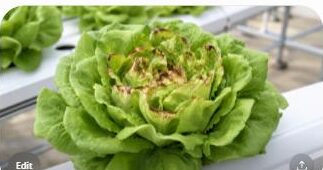
What It Looks Like
- Brown, dead edges on inner young leaves
- Outer leaves often look healthy
- Tissue collapses and turns brown starting from the margins
- Common during rapid growth phases
Root Cause
Inner lettuce leaves have few stomata and transpire very little. Calcium moves through the plant via the transpiration stream (xylem). Inner leaves that transpire minimally receive almost no calcium even when the reservoir has adequate levels. High humidity (above 75%) worsens this by reducing all transpiration.
Prevention Checklist
- Airflow: Direct gentle airflow across the crop canopy 24 hours a day. This is the most effective fix.
- Humidity control: Keep relative humidity below 70–75% during the day.
- EC: Do not let EC drop below 1.2 mS/cm for lettuce. Calcium concentration in the solution needs to be adequate.
- pH: Maintain 5.8–6.2. Calcium availability drops significantly above 6.5.
- Temperature: Higher temperatures increase transpiration and reduce tip burn. Avoid growing lettuce too cold.
- Varieties: Some lettuce varieties are significantly more resistant to tip burn. Batavian and romaine types are more resistant than butterheads.
UAE Note
In UAE indoor growing spaces, air conditioning can create low transpiration conditions even when humidity is moderate. Running a circulation fan at low speed directed at the crop (not blasting) is the single most effective tip burn prevention measure in controlled UAE indoor environments.